From the 1950s onwards, travel became increasingly accessible and popular in Western Europe, for both tourism and business reasons. Meanwhile, behind the Iron Curtain, there was an entirely different world, from which only a select few could travel abroad. This world – the Union of the Soviet Socialist Republics (USSR) – was conceived as an economically, ideologically and geographically disconnected political entity. However, albeit extremely limited, there was exchange between the two worlds. To promote a better understanding about how this exchange took place, this paper discusses the experiences of architects in the Latvian Soviet Socialist Republic, which existed in the territory of Latvia from 1940 to 1941 and from 1944 to 1990, after its annexation to the USSR. It aims to contribute to scholarly research on the Soviet period by focusing on its periphery – an area that is generally less studied. The paper challenges the assumption that the Soviet Union was a culturally homogeneous territory. It provides insights into the Baltic region, which was well connected to Western Europe and culturally and economically thriving until Second World War, when it was occupied by the USSR and fell into stagnation.
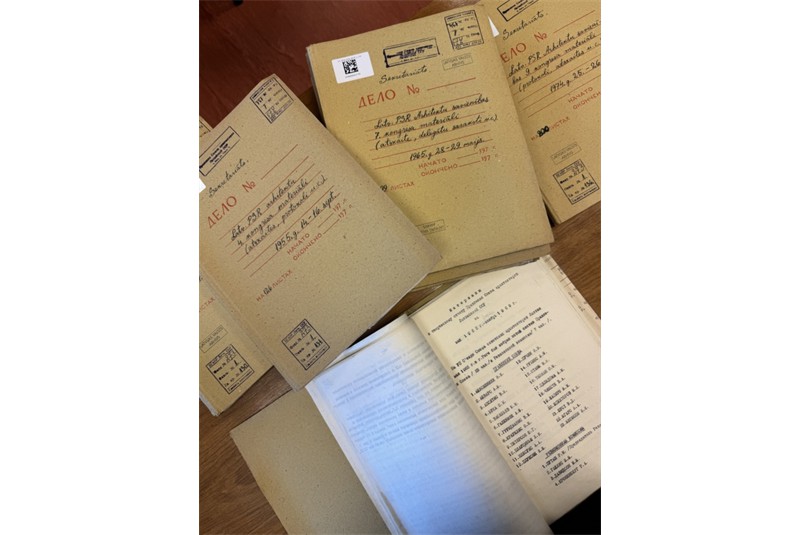
For this paper, original material from the Latvian State archive was consulted. This includes documentation of the congresses of the Architects’ Union of the Latvian Soviet Socialist Republic (Latvian SSR) throughout the Soviet period, namely, years 1948, 1951, 1955, 1959, 1962, 1965, 1969, 1974, 1979 and 1989. (Fig. 1) Furthermore, several interviews have been conducted in 2024 with architects who have been professionally active during the period of Latvian SSR and have had an influential role in the local architecture scene.
Two sides of the Iron Curtain
Although ideologically extremely diverse from each other, the Soviet Union and the Western world were fierce rivals during the Cold War, both actively following each other’s technological developments. In many disciplines, professionals even wanted to learn from each other, and architecture was no exception. In her study on connections between the Soviet and Western architecture, historian Olga Yakushenko observes that «the main aspiration of Soviet architects was to become as similar to their Western counterparts as they could» by «catching up [after delay in architectural development caused by the Stalinist neoclassical era and] reintroducing themselves to the international community» (Yakushenko 2020, p. 3). The main area of interest for Soviet architects was the aesthetics of Western Modernism. In contrast, Western architects were interested in how Soviet architects approached socially oriented architecture, such as mass social housing. At the same time, both sides interpreted the information they received differently, due to the lack of knowledge of each other’s reasoning and motivations, as well as the extremely different contexts they represented. These differences in understanding persist, especially the narrow apprehension of the processes in the USSR. Hence, this paper aims to raise awareness of how architecture was developed at the time: what were its objectives and what constituted the conditions that facilitated or impeded the achievement of these objectives.
Architects’ professional routine
Although many impressive and architecturally outspoken buildings have been realised in the USSR (see for example the collection of Frédéric Chaubin, 2011), these were the exception rather than the norm. Architects in the whole USSR worked in the so-called design institutes, and each of these institutes was dedicated to developing projects for one specific program (such as residential buildings, industrial buildings, urban plans etc.). Furthermore, most of the standardised building projects were developed centrally in Moscow’s institutes and these had to be used as much as possible everywhere in the union. This policy was rooted in the idea that designing site-specific, original projects would be a waste of time and human resource. As a result, Latvian architects were mostly dealing with the adaptation of the standardised projects to the local sites, or in other words: positioning them on the allocated plot, adapting the plans to the size of the plot, revising the materials used according to their availability.
The occasional opportunities for original designs opened when buildings of specific or significant program had to be realised. And even in such cases, as recounted by Jānis Lejnieks[1] (2024), it was usually because someone in a position of power had the ambition and took the effort to persuade the officials higher up in the hierarchy that such original designs were necessary. Then, open or invited architecture competitions were organised. In certain instances, as Lejnieks recalls, a specific architect was invited even without a competitive selection process having been undertaken.
There were also other occasions when limited architectural modifications to the standardised residential buildings were possible. For instance, this occurred when the building was intended to house «privileged members of society according to certain criteria», as recounted by Edgars Treimanis[2] (2024). In such cases, a higher ceiling could be designed, or the red brick, which was expensive and in short supply, could be used for façades instead of the prefabricated concrete plates as in the standard projects. In other cases, it was the architect’s own initiative. It required a lot of effort from them, since all the deviations from standard had to be justified in terms of cost, material availability, and in any case, one was not permitted to exceed certain norms. Juris Poga[3] (2024) recalls an anecdotal episode from the approval process of a residential building project, on which he worked as a young and ambitious architect in his 30s. To his surprise, this project was rejected at a certain stage of design because the area of the apartments was larger than allowed. It later appeared that the error was due to the fact that the dimensions of the rooms were taken from one brick wall to another, without the thickness of the plaster that covers the walls being deducted.
Architecture and ideology
After Latvia’s annexation to the Soviet Union, Latvian architects were faced with a new reality where suddenly other criteria were applied for defining architect’s qualification and mission than the ones they were used to. The reports of the Latvian SSR Union of Architects’ congresses testify to the considerable effort that was put into educating architects on these new values. For instance, the 1948 report (Latvijas PSR arhitektu savienība 1948, p. 41) concluded that it was necessary to establish a community of architects that was ideologically appropriate to the socialist construction requirements. To achieve this, the document states, several conversations have been held with the managing board of the Faculty of Architecture, which has already positively affected the study processes. Furthermore, it reports that «ideologically educational work has been executed by the Architects Union by organising lectures on current political and ideological questions delivered by highly qualified speakers – both local and from the centre» (Latvijas PSR arhitektu savienība 1948, p. 41). The congress report of 1951 (Latvijas PSR arhitektu savienība 1951, p. 65) contains a section titled Ideologically political education of the members of the union, which reports that «work has been done to involve the members of the Union into the Evening University of Marxism-Leninism» and as a result «out of the total number of 121 members 51 people have graduated the University of Marxism-Leninism» while many others are currently studying or have finished studies and only need to pass the exam.
The reports of the congresses also testify to the limited agency the local architects had following Latvia’s occupation by the USSR. As with the architecture projects, which were designed in Moscow and then adapted to local conditions, the general policies and decision-making processes were also developed and executed there. Moscow in the congress documents is referred to as “the centre”, as in the quote on ideological education cited before. Throughout the documents, “the centre” is repeatedly mentioned, along with the Union of Architects of USSR, which maintained a strong controlling function over the local architects’ unions.
Traveling from Latvian SSR
For the citizens of the USSR, traveling both within the union and abroad, was strictly controlled by the state. Depending on the destination, various types of approval were required. Travel for architects was considered part of the so-called qualification raising measures, which also included lectures, exhibitions, film screenings, foreign language courses, painting and drawing workshops, etc. The organisation of trips to local destinations was the responsibility of the local unions of architects, whereas all travel abroad was exclusively managed from Moscow, with the local unions tasked with providing the allocated number of participants.
Initially only travels within USSR and to socialist block countries, such as Poland, Romania, Bulgaria, Czechoslovakia, German Democratic Republic or East Germany, were organised. The first travels by Latvian architects to the Western world are documented in 1964. The congress documentation states that as part of the lectures and reports delivered at the Union of Architects, there has been the Report of the participants of excursion, architects Lūse, Savisko, Markova, Dmitrijeva, «On the tour of a group of architects to Austria. Demonstration of coloured diapositive slides» (Latvijas PSR arhitektu savienība 1965, p. 26). In this report of the 1965 Congress, which covers activities undertaken during the preceding three years, architects’ international travel is mentioned only in this instance. The four individuals referenced provide an indication of the exceptionally limited number of travellers, particularly in light of the fact that the Union at that time comprised 257 members.
There were other attempts to update local professionals on the processes in Western architecture. For this purpose, events were organised by the Union of Architects, where also people from other disciplines, who apparently were more likely to travel, reported on their experiences. For instance, in December 1964 a Report of the journalist-correspondent E. Mežavilks «Architecture of TOKYO through eyes of a Soviet Latvian journalist» had taken place (Latvijas PSR arhitektu savienība 1965, p. 26). One can only imagine a difference the eyes of an architect would have made, not to mention a physical presence.
The numbers of travellers in the years to follow remains extremely small in comparison to the members of the union (only those were eligible to apply for the trips). To gain insight into practicalities regarding traveling, several architects who were practicing during the Soviet years were interviewed, born in 1950 and later. This means that the accounts refer to events from the late 1970s and 1980s. Lejnieks remembers that every year Union announced open application to several trips abroad (Lejnieks 2024). However, the number of available positions was limited to a couple of places per trip, which may have deterred many architects from applying. There were no clear selection criteria either, and the interviewees could only speculate on the reasons they were chosen, such as, for instance, being active in the union’s youth section.
When asked why according to him such trips were organised at all, Andris Kronbergs[4] pondered that it could be an attempt to uphold a narrative that such thing as an Iron Curtain would not exist, that there is a movement of people (Kronbergs 2024). He also thinks that the travel opportunities provided architects with invaluable professional knowledge, thereby enhancing their overall satisfaction with working conditions and the Soviet system in general.
Lejnieks confirms this, stating that when Soviet architects were tasked with designing a hotel for foreign guests, they lacked the necessary knowledge to meet Western standards. Consequently, visiting such places abroad was essential to be able to deal with these design tasks. Ināra Kārkliņa[5] shares how her trip to the USA in 1989 provided her with valuable knowledge on hospital design, while she was herself involved in designing an extension to the Institute of Traumatology in Riga (Kārkliņa 2024). This travel opportunity, however, was not obtained through the Union of Architects but instead, thanks to her active participation in the Society for Latvian and Foreign Cultural Relations[6].
In the USA, the visit of the hospital was made possible thanks to the professional and personal relationship between the director of the Institute of Traumatology Viktors Kalnbērzs, and Kristaps Keggi, a senior medical professional who had emigrated from Latvia with his family during the Second World War. At the time of Kārkliņa’s visit, Keggi was working as a researcher at Yale University and practicing surgery at a local hospital. Kārkliņa recalls how excited she was about this opportunity, noting that, in general, travels organised by the Society for Cultural Relations did not specifically focus on architecture. The groups of travellers consisted of professionals from a variety of cultural sectors, and members of the groups were not permitted to wander around on their own when abroad. This account highlights the challenges and unpredictability of travel for Soviet Latvian architects.
Regarding the travels of architects, the Soviet Union of Architects in Moscow allocated a small number of places to other countries of the USSR, whose local Architects’ Unions had to announce the call and select participants. Lejnieks remembers that there was an unwritten rule that the same person was not granted the right to travel more often than once in three years (Lejnieks 2024). He himself entered the Union of Architects as a young and active architect in 1978, and already in 1980, he was offered the opportunity to join a trip to Japan. A day before his scheduled flight to Moscow, followed by onward travel to Tokyo, he was requested to present himself at Cheka[7].
He was interrogated on his personal relationship with an individual who had contacts abroad and, according to the Soviet secret services, was a dissident. Although Lejnieks reportedly was not privy to the details of the situation and had not engaged in any dissident activities himself, he was denied travel abroad on the basis of this accusation. Lejnieks was asked by his colleagues at the Union of Architects to refrain from applying for further travels in the following years, as they were concerned that the permit would be rejected by the Cheka anyway. In such case the place allocated by Moscow would get lost, and some other architect would be deprived from the opportunity to travel.
In this regard, the following remark included in the 1974 Congress documents raises questions:
Regardless of the fact that the number of applications to specialised touristic tours exceeds the number of places, there have been cases when the allocated places have not been filled. For instance, in 1974 the [evaluation] commission has been forced to renounce of the places in tours to Bulgaria, Romania and partly also German Democratic Republic due to the lack of interest (Latvijas PSR arhitektu savienība 1974, p. 54).
It is surprising that, despite the limited travel opportunities and significant interest from architects, the places are not being used. The reasons for this, however, are unclear. Applicants may have been denied travel by the Cheka, after being approved by the Union of Architects, like Lejnieks was for his trip. But it is equally possible that the announcement of the travel opportunity or the selection process for candidates may not have been handled in a timely manner by the Union of Architects or other institutions. In any case, this is clear evidence of the paradoxical nature of the Soviet system and the ineffectiveness of its administration.
Other sources of knowledge and inspiration
Given the limited opportunities for architects to travel abroad, those interested in architecture had to rely on second-hand sources. One such opportunity to discover Western architecture was to attend the slideshow events that took place at the Union of Architects after the trips abroad. All architects who had travelled were obliged to provide a report for their colleagues back home. These reports were illustrated with an extended slide show, providing insight into architectural details as well as life in general.
Other sources were the few monographs by Russian authors on the key figures of Western architecture, such as Le Corbusier, Walter Gropius and Kenzo Tange, as Lejnieks recalls (2024).
Furthermore, many Latvian architects have fond memories of Western architecture magazines, such as «Architectural Review», «Domus», «Abitare», «L’Architecture d’Aujourd’hui», «Deutsche Bauzeitschrift», as well as one on Japanese architecture. According to Māris Kārkliņš[8], the latter two have been particularly valuable for their architectural details and technical drawings (Kārkliņš 2024).
Architects in the Soviet Union lacked personal experience with luxury architecture, and sometimes even relatively simple design tasks formed a challenge for them. Kārkliņš reflects on a project he worked on together with his wife, Ināra Kārkliņa – a hunting lodge for the local leaders of the communist party, for which they had to design a fireplace. There were no technical specification sources for such an element, nor for other features required in hotels for foreigners, for instance. Soviet architects did not have access to a reference book like Neufert Architects’ Data, which has been an invaluable source of technical details for Western architects since the 1930s. The State Library had a subscription to the aforementioned magazines; however, according to the architects’ recounts, they could not be borrowed privately. Therefore, the design institutes placed a monthly order, and someone would go and collect the magazines, which would then be available for the architects’ collective to consult for a week or two at their workplace.
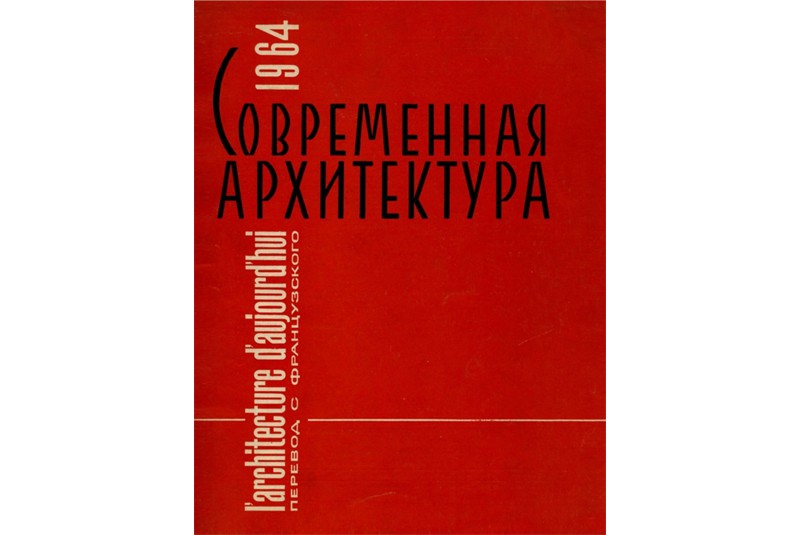
Regarding «L’Architecture d’Aujourd’hui», an agreement was established with the publisher for the magazine to be translated into Russian and republished in Moscow with the title «Современная архитектура»[9]. (Fig. 2) Lejnieks recalls that the images were in black and white and of very low resolution. All pages originally containing advertisements were omitted, and the text content was possibly slightly edited, although he has never compared the two versions.
Probably because it was locally published, «L’Architecture d’Aujourd’hui» was the most accessible and popular magazine of foreign architecture. Many architects born after 1950 who are still active professionally mention it when asked about their sources of insight and inspiration during the Soviet era. However, probably due to fading memories, accounts of its shape and content vary. Some remember it as loose pages photographically copied – this may have been a way to keep the magazine in one’s own library. Others recall the text being in French, although only the page of the contents page was doubled in French. This suggests that the architects were not really reading the texts but rather focusing on the images and drawings.
Other sources also confirm that «the main practice of working was not reading, but rather looking at pictures and drawings» (Yakushenko 2020, p. 28) because «the texts a priori contained criticism of capitalist countries’ experience» (Kudriatsev 2007, p. 8).
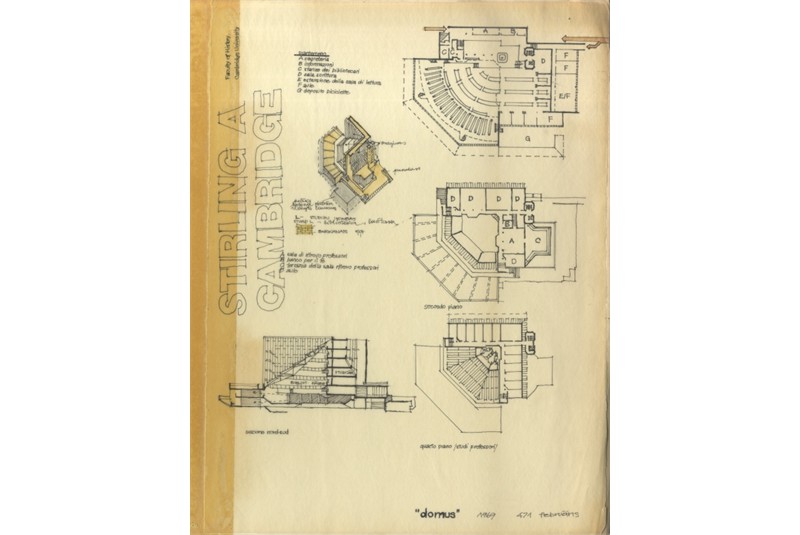
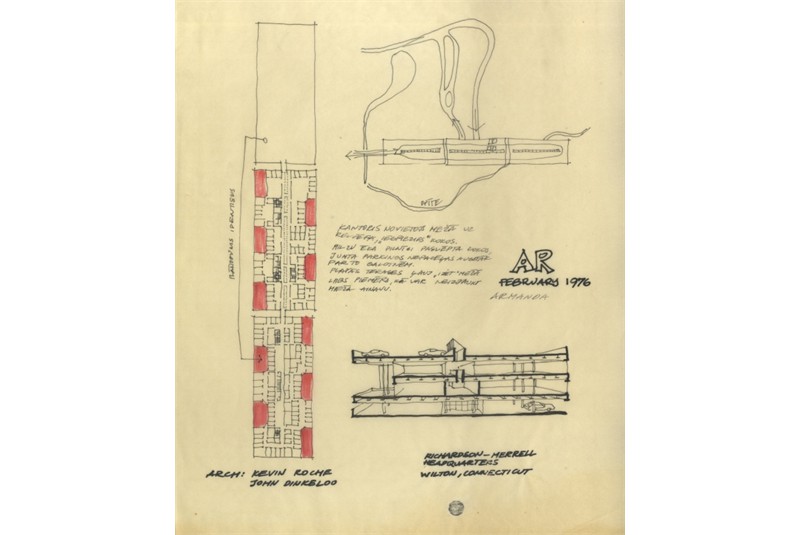
Due to limited access to information – even architecture magazines were only available for short consultations – architects developed unusual practices for conserving valuable graphic data. They traced the pages of the magazines onto tracing paper, thus both copying and studying the subject of interest. These drawings sometimes depict specific technical details, floor plans or sections, or pieces of furniture. In other cases, they reproduce entire magazine pages, including their original graphic layouts. A short bibliographic note is often added, including the title of the magazine, the issue number and the year (Figs. 3 and 4).
Delights and challenges of Soviet travellers
Travelling abroad, especially to Western countries, was a unique experience at the time, even more so given the extreme differences in everyday life on both sides of the Iron Curtain. Although the official reason for the trips was to see Western architecture, it could be argued that the most emotionally overwhelming aspect of the travels was related to everyday occurrences.
One thing that struck Soviet citizens was the abundance of shopping opportunities provided by huge department stores full of consumer goods and equipped with escalators. This was in stark contrast to the permanent scarcity of everyday commodities in the USSR. However, the travellers could barely purchase anything due to the extremely low value of the rouble compared to foreign currencies. To deal with this situation, they sometimes resorted to some rather unusual business practices. One of the architects recalls selling Soviet vodka to locals during their trip to Finland. They had taken the permitted number of bottles with them and managed to trade them at the hotel for a considerably higher price, which was still a bargain for the Finns. The money they made allowed them to cover some of their daily expenses.
Poga tells a funny story about his trip to Sofia, the capital of Bulgaria. He and a couple of colleagues had won second place in an architectural competition and had to travel there to collect the prize money (Poga 2024). The prize money was huge – 7000 Bulgarian leva – more than a car would have cost at the time. After receiving it, they realised that they would not be permitted to take this amount of cash out of the country. So, they split the money and decided to buy something with it instead. It was only then that they realised that the shops had the same empty shelves as in their home country.
Reflecting on their travels from their current position as citizens of a democratic capitalist country, architects remember being surprised by some of the experiences shared by their Western counterparts. Kārkliņa recalls visiting the studio of Latvian expatriate architect Andrejs Legzdiņš in Stockholm. Among many positive things, Legzdiņš had pointed out the difficulties related to running one’s own architecture practice. Kārkliņa only fully understood these difficulties after the fall of the USSR, when the state design institutes were dissolved, and she established her own architecture office.
Treimanis remembers a similar confrontation when he visited the German Democratic Republic for an awards ceremony following an architecture competition (Treimanis 2024). They had been celebrating their success with representatives of the other teams, who were from a variety of countries, including Western ones. At some point, someone mentions the Finnish team who had not been able to attend the event due to urgent professional commitments. Treimanis awkwardly jokes about having pity for those unable to join such a joyful party because of work. He then realises that not everyone finds the joke equally funny. Having urgent duties also means having commissions, which is something a Soviet architect would not have had to worry about.
These stories reveal the stark differences in professional and personal life experiences between the Soviet and Western worlds. Professionally, architects in the Latvian SSR lacked opportunities for self-expression, as well as information and enriching experiences. In their personal lives, they were forced to live with constant material scarcity and under strong ideological control. They had to be cautious not only about what they said in public and in private, but also about what they owned and who they socialised with. At the same time, life moved at a much slower pace. They did not have to worry about their jobs or salaries, however low they were. They sought joy elsewhere, hoping to break free from Soviet occupation soon.
[1] Jānis Lejnieks (1951) was a practicing architect and art historian during the Soviet period, currently editor-in-chief of the Latvian architecture review «Latvijas Architektūra».
[2] Edgars Treimanis (1954) was a practicing architect during the Soviet period.
[3] Juris Poga (1957) was a practicing architect during the Soviet period.
[4] Andris Kronbergs (1951) was a practicing architect during the Soviet period, currently runs the architecture office “Arhis arhitekti”.
[5] Ināra Kārkliņa (1950) was a practicing architect during the Soviet period.
[6] The Society was founded in 1956 as part of the Soviet Union’s Society for Cultural Relations with Foreign Countries and its goal was to promote mutual rapprochement in the fields of science and art, literature, school, tourism, sports, everyday life and the economy between Soviet citizens and foreign peoples. One of its tasks was also to monitor the counter-propaganda spread by the people who had emigrated or fled the Soviet Union and lived abroad (Latvijas Nacionālais arhīvs 2025).
[7] All-Russian Extraordinary Commission (Всероссийская чрезвычайная комиссия), Cheka is the pronunciation of the initials in Russian title – ЧК.
[8] Māris Kārkliņš (1950) was a practicing architect during the Soviet period.
[9] «Современная архитектура» (Sovremennaya arkhitektura) was published since 1964. Not to be confused with the magazine of the same title in Russian, published between 1926 and 1930 by the Constructivists.
CHAUBIN F. (2011) – CCCP – Cosmic Communist Constructions Photographed. Taschen, Cologne. ↩
KĀRKLIŅA I. (2024) – Interview conducted by the author on 15 May 2024. ↩
KĀRKLIŅŠ M. (2024) – Interview conducted by the author on 15 May 2024. ↩
KRONBERGS A. (2024) – Interview conducted by the author on 23 January 2024. ↩
KUDRIAVTSEV A. (2007) – “Sluzhenie arkhitekture” (Dedication to architecture). In: A. Ikonnikov, Polveka sluzhenia arkhitekture (Andreĭ Vladimirovich Ikonnikov. Fifty years of dedication to architecture). Moscow, p. 8. ↩
LATVIJAS Nacionālais arhīvs (2025) – Latvijas un ārzemju kultūras sakaru biedrība (Society for Latvian and foreign cultural relations), https://kgb.arhivi.lv/dokumenti/vdk/piesegorganizacijas/draudzibas-biedriba, accessed 26 May 2025. ↩
LATVIJAS PSR ARHITEKTU SAVIENĪBA (1948) – Latv. PSR arhitektu II kongresa materiāli (protokoli, atskaites, delegātu saraksti u. c.) 1948. gada 8.-24. maijs, Latvian State Archive (LV_LNA_LVA_F273_1_129). ↩ ↩
LATVIJAS PSR ARHITEKTU SAVIENĪBA (1951) – Latv. PSR arhitektu 3. kongresa materiāli (protokoli, atskaites u. c.) 1951. gada 10.-14. decembris, Latvian State Archive (LV_LNA_LVA_F273_1_130). ↩
LATVIJAS PSR ARHITEKTU SAVIENĪBA (1965) – Latv. PSR Arhitektu savienības 7. kongresa materiāli (atskaite, delegātu saraksti u. c.) 1965. gada 28.-29. maijs, Latvian State Archive (LV_LNA_LVA_F273_1_134). ↩ ↩
LATVIJAS PSR ARHITEKTU SAVIENĪBA (1974) – Sojuz Arhitektorov Latvijskoy SSR (Союз Архитекторов Латвийской ССР) 1971-1974, https://www.latarh.lv/storage/files/LAS%20IX%20kongress.%20(1970–1974).pdf, accessed 26 May 2025. ↩
LEJNIEKS J. (2024) – Interview conducted by the author on 6 January 2024. ↩ ↩ ↩ ↩
POGA J. (2024) – Interview conducted by the author on 2 May 2024. ↩ ↩
TREIMANIS E. (2024) – Interview conducted by the author on 24 May 2024. ↩ ↩
YAKUSHENKO O. (2020) – Building Connections, Distorting Meanings: Soviet Architecture and the West, 1953-1979. European University Institute, Department of History and Civilization, Florence. ↩ ↩