Riccarda Cantarelli
The year 1974 was to prove decisive for Carlo Aymonino: he took over the direction of the University Institute of Architecture in Venice, and in Pesaro he presented a Detailed Plan for the Old Town (1971-1974), a complex collective design which focused on the relationship between conservation and transformation in the context of ancient urban structures and housing, as an expression of architectural-urban unity. This plan was the most complete and mature manifesto of the research and implementation of the theories of the IUAV Gruppo Architettura, established in 1968-69, and dissolved by Aymonino in 1974 when he took office at the Institute.
As part of a literacy programme for Secondary Schools with specific state funding, Aymonino created a documentary television series for the Rai state broadcaster on the theme of URBAN SETTLEMENT, that is, the role of housing in the formation and development of the modern and contemporary city, a research topic presented by Aymonino himself in the Introduction to the 1970-71 Academic Year Programme of the University Institute of Architecture of Venice1 which would be arranged to include experimental operational research, of the Gruppo Architettura, following different options, for at least a decade (even after its formal dissolution).
The meaning of this operation can be found in the vision of openness of the academic world to society that Carlo Aymonino explained at the end of his Introduction:
"[...] It is necessary to transform the university from an island of semi-privileged people into a productive part of a different social order. Productive not in the purely instrumental sense [...], but in the scientific sense, [...] breaking the diaphragm that separates the university from society, which separates it from the forces that this society wishes to change. It means above all committing oneself to the problems that the geopolitical place has to solve, without losing sight of the theoretical aspects that the problems themselves solicit and impose" (Gruppo Architettura 1971, pp. 5-6).
From April 1974 until June 6, 1974, 8 episodes were aired,2 proper lessons in architecture that – with the use of accurate video images which showed shots of the cities described from above, specific works of architecture with interiors shot up close and varied urban contexts – proposed an original discourse on the city with a narrative that began from the existing situation and looked to the future. One thing worth noting was the choice to present the architectural projects featured in the programmes not through drawings, shown only in a few cases, but with the use of models which were instantly easier to understand for the viewer. So far, recovery of these precious videos has only allowed the retrieval of three episodes, including the two closing ones, which have revealed the significance of his work.
In those years, with the cities of the future in mind as per Le Corbusier, he had engaged with the urban peasants of Rome by designing the Tiburtino district (1950-1954); the workers of Milan with the Monte Amiata residential complex in Gallaratese (1967-1972), and had condensed socialism into one single district, the Spine Bianche in Matera.
It is no coincidence that one episode was dedicated to none other than Utopia, where social problems were translated into architectural solutions. From there the reconstruction carried out during the individual episodes began and returned later, each project dedicated to a theme with specific examples presented in Italy but also from the rest of Europe.
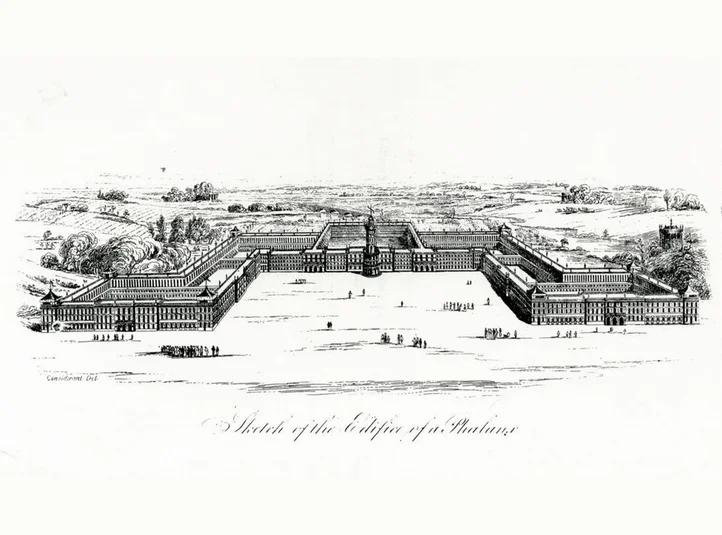
Developed in the early 19th century, through such figures as Owen and Fourier, utopia in architecture gave a progressive vision of the "mode of associated living". Unrealizable and technological Utopias are described as utopias which discard any relationship with history because they hypothesize a technological organization that ignores contemporary production relationships. The examples reported in the TV programme included Walking Cities, huge mobile machines equipped with every urban amenity and connected to each other by telescopic tubes, a response to the growing mobility of the population; the Great Dome, which could cover a third of Manhattan should ensure constant climatic conditions, avoiding the annoyances of natural weather; the Floating City whose inverted pyramids offer the possibility of unlimited growth; the Cluster City, based on "prefabricated housing cells made from plastic"; the Crater City, an "artificial ensemble that incorporates natural elements into its continuous structure"; the entirely mechanized Pyramid City for 3 million inhabitants; the Linear Pyramid City designed for the urban development of Siberia.
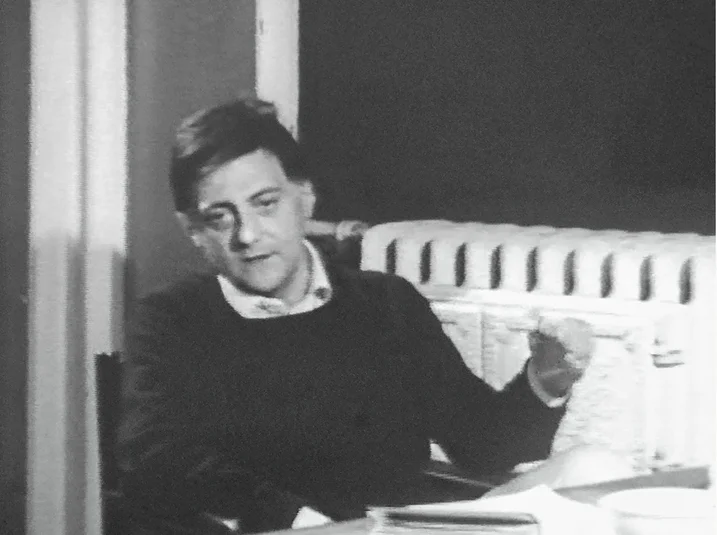
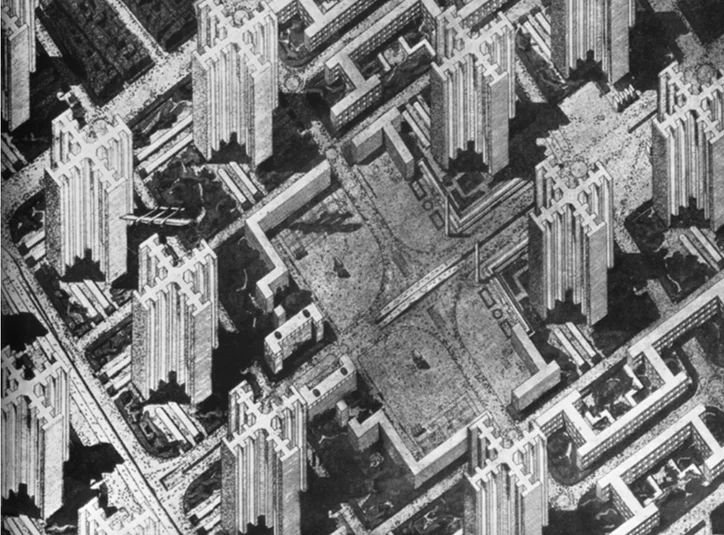
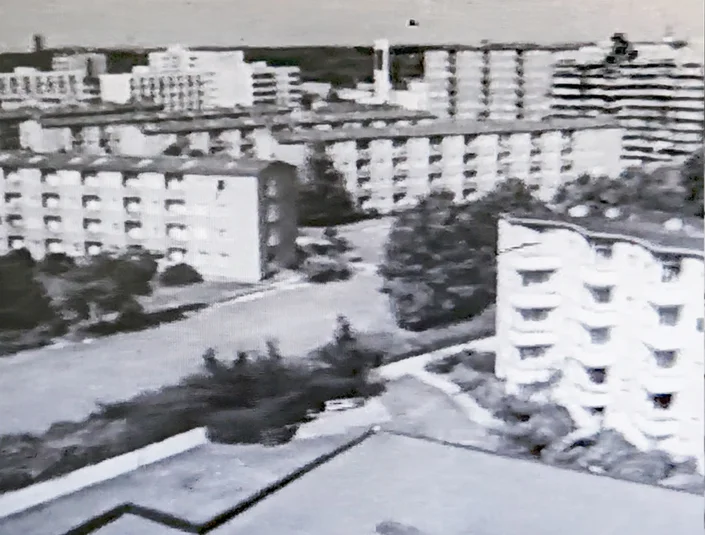
All utopias which are not only unrealizable, but do not even have a concrete character as compared with the modern city, explains a young Aldo Rossi interviewed as an authoritative voice in the first part of the episode. And yet the dilemma remains: the current trend of millions of inhabitants to be located on the Earth's surface. These problems are addressed by modern architecture through the personality of Le Corbusier, who presents a series of plans for urban transformations with a realist approach, that is, a progressive characteristic with respect to the history of architecture, just as he did in his Plan Voisin for the centre of Paris, or as was realized in the Siedlungen, new districts in German cities built around the 1930s. These were anticipations of a way of transforming the city that belonged to the field of the real or possible.
Another point addressed by Aymonino in his popular productions was the relationship between the home and the workplace, an issue inevitably addressed in almost all Italian cities in those early '70s, in particular when it comes to industrial estates. This episode focused on three specific exemplary case studies for the Italian context: Taranto with Italsider, Ivrea with Olivetti and Turin with Fiat.
Starting from the Taranto case, the first consideration concerned the contrast with the predominant national way of building factories far from urban structures, where land was cheaper, vehicular access was easier and where it was possible to join the railway network. This was how factories had become purely production places, islands excluded both culturally and physically from the life of the town. In Taranto it had not been like that. The Italsider plant, a large-scale steel processing facility, designed in 1963 and one of the largest such complexes in Europe, had heavily influenced the development of the city and its surroundings.
Aymonino analysed the political choices made in deciding the sites intended for the homes of employees, begging to differ with them. The most immediate solution was to build a new district near the factory, of almost 20,000 dwelling units, financed by Italsider, to which only 3% of the workers had actually been allocated, however. Due to the considerable dearth of services and infrastructures, it was not possible to reach the city from this area and this had determined its fate, ending up as a workers' ghetto. From there came so much urban development that Taranto became one of the most congested cities in Italy. A monotonous sequence of buildings built by a private speculative initiative, without services or amenities, where rents were higher than in any other Italian city, its traffic paralysed during rush hour, and travel times doubled. The province was gradually depopulating while the city was enduring huge congestion. On the contrary, the conditions for a more balanced development did exist; Aymonino speaks of three possible choices: in the inland residential centres, included within a commuting radius of 20-30 minutes; in areas decentralized from the city but close to the plant; in neighbouring villages that had existing and partially serviced urban facilities, connecting them to one another and to the industrial estate through a system of efficient and rapid traffic networks of a predominantly public nature. In general, such a development would have cost the community less and the majority of workers would have continued to live in their hometown without too much inconvenience.
Another example, this time in northern Italy, is the opposite model to the one adopted by the Apulian town: Ivrea, a city of 40,000 inhabitants in the 1970s, bordering the Aosta Valley. Since the beginning of the 20th century, it had more than doubled its population, transforming itself from a large agricultural centre in the Canavese area to an industrial city, conditioned by the existence of a single company, Olivetti. The greatest merit of this company has always been to maintain a point of balance between the Old Town and the industrial estate. One of the first nuclei was the Olivetti district, whose construction began in 1941 and was completed in 1954. The Bella Vista district was 2 km from the factory and was equipped with such public amenities as schools, kindergartens, clinics, social centre, and playgrounds for children. Subsequently, this development was extended to other areas of the Canavese: San Bernardo, Agliè and Caluso. In addition to this urban development plan, it was the associative and cooperative economic initiatives in the agricultural centres that decreed an "Ivrea experiment" in which the factory was not excluded from the city, i.e. the distance between the home and the workplace was solved by an efficient urban organizational system.
The third example addressed was the city of Turin, home to the only major international company existing in Italy at that time: Fiat, the driving force of industrialization, a symbol of progress and mass production, with such iconic models as the Fiat 127 and the 131 Mirafiori. In those years, the city was the scene of bitter workers' struggles for rights and working conditions, becoming a symbol of social conflict. With Fiat, the integration process saw the city become the property of the company, especially culturally. Production development had brought the population from 905,000 inhabitants in 1953 to 1,620,000 by the '70s. Of these, almost half were immigrants. The urban layout, the masterplan, the public housing programmes and those of Fiat had not been able to withstand that immigration flow. With the result that the city had become a huge ghetto, or rather a set of ghettos ringing the factory complex. In the Old Town, in the 31,000 houses (with at least 13,000 cases of cohabitation) people lived in precarious hygienic conditions, where there was only one bed, which was used for temporary rest dictated by factory shift schedules. In the belt, that is, those radial branches of the city along the access roads, the worker immigrants paid for the lowest cost of living with an absolute dearth of services and with living conditions reminiscent of those of the initial development of British capitalism.
Here was where Aymonino's approach and his ability to look to the future came into play. Architecture, while not resolving all social contradictions, can in its specific field of competence improve the material conditions of everyday life by indicating new solutions. The ultimate goal being to transform the urban settlement from a ghetto for the excluded to a part of a city for people with the same rights. This demands not only design and technology, but also "the backing and support of those directly involved" and a unified political vision that can trump administrative and financial fragmentation, all guidelines to be found in the Pesaro Plan (Municipality of Pesaro, 1974).
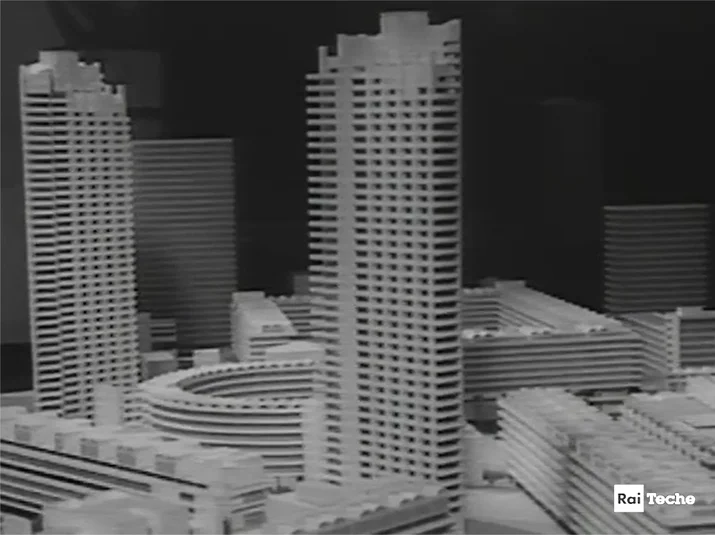
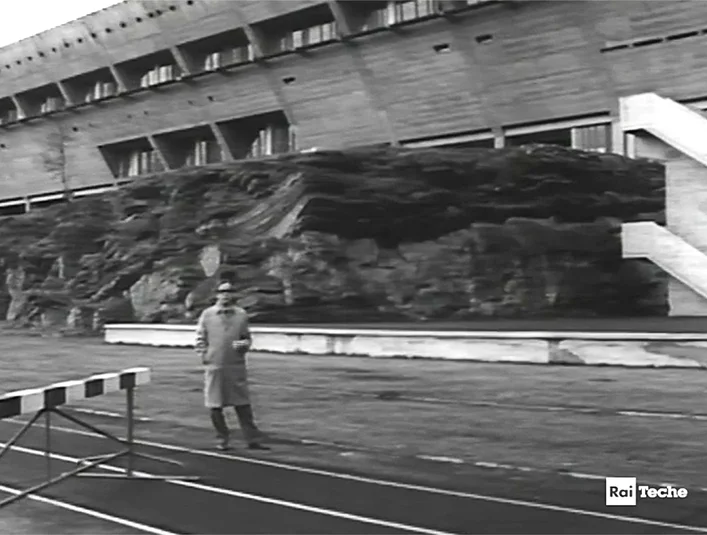
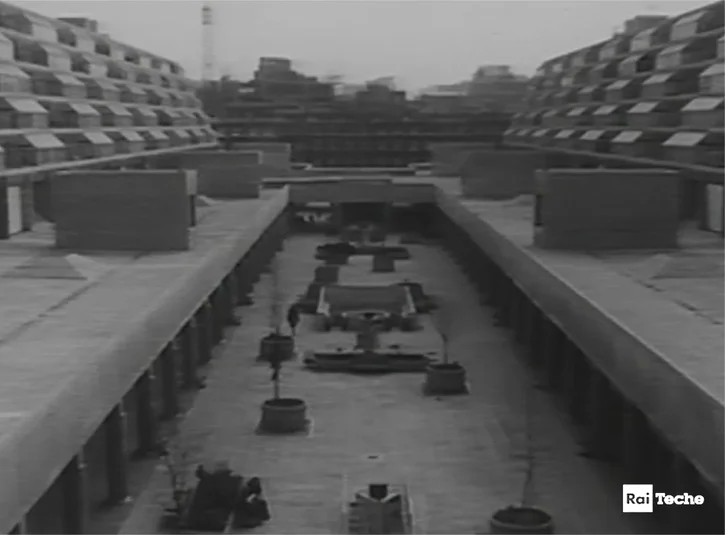
From Italy, Aymonino broadened his gaze to Europe, focusing on the importance of public interventions and unitary planning to create integrated functional urban settlements, by defining a particular concept of "settlement units". In London, as early as 1944, an attempt had already been made to abolish the parcelling of land according to the regime of private property and allow a unitary design intervention. The aim was to apply design choices to real parts of the city, considering intended uses, traffic systems, and relations with the entire city as elements of a unitary architectural solution. The examples cited in the eighth and final episode showed the desire to overcome the parcelling and building types typical of Italy to create relationships between the various elements that make up an urban structure, including traffic systems, shopping malls, schools, different housing types, spaces for play and sport.
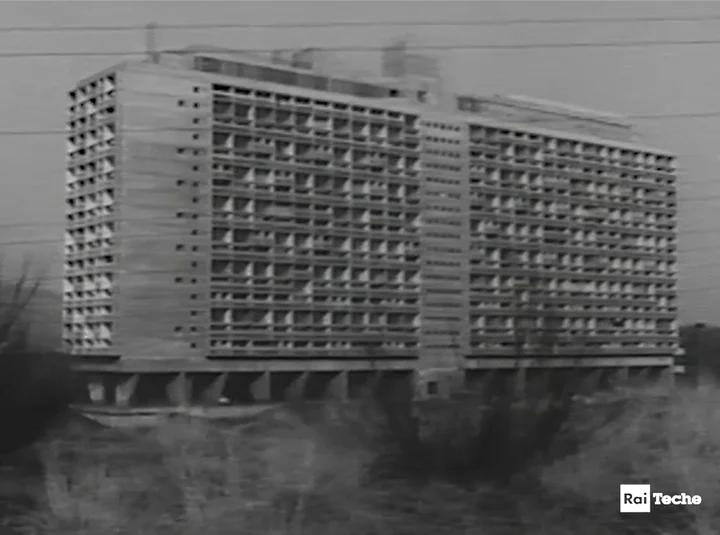
Among the cases analysed, we can mention: in London Thamesmead, the Brunswick Centre and the Barbican; in France the Firminy-Vert. The report followed this analysis procedure:
"I think that the relationship between residences and community amenities (and even more so the relationship between residences and sources of work) should be discarded as a compositional antithesis (a reflection in turn of a sociological and economic antithesis) and should instead be taken as a structural relationship for the definition of more organizational and formal hypotheses of the contemporary city"3 (Aymonino 1976, p. 276).
These restricted examples from abroad were for Aymonino a demonstration of how the relationship between housing, services and amenities could change, with meaningful collective advantages. Clearly, according to this vision, the modern city could be fully realized if private ownership of the land was annulled and there was a unitary plan of productive and social investments.
At this point the concept of utopia arrived which, for Aymonino, in a positive and progressive sense, must restore a concrete character to cities, saving the Old Towns with a perspective of a residential character and not of exploitation or destruction.
Therefore the city not only meant expansion, but also the possibility of re-equipping the already built over time following an investment plan. In the post-war years, speculative investments had taken place in the Old Towns of major cities that had expelled the inhabitants of the most popular private classes to make way for new privileged homes with sophisticated offices and shops. This operation, which began during the Fascist dictatorship, according to Aymonino, had destroyed symbols of the city in Rome, such as Piazza Augusto Imperatore which had become a huge parking lot around the ruins of Augustus' mausoleum with the illusion of the square as a place of meeting and life. The destination of the Colosseum had been little different, reduced to a huge roundabout for road traffic.
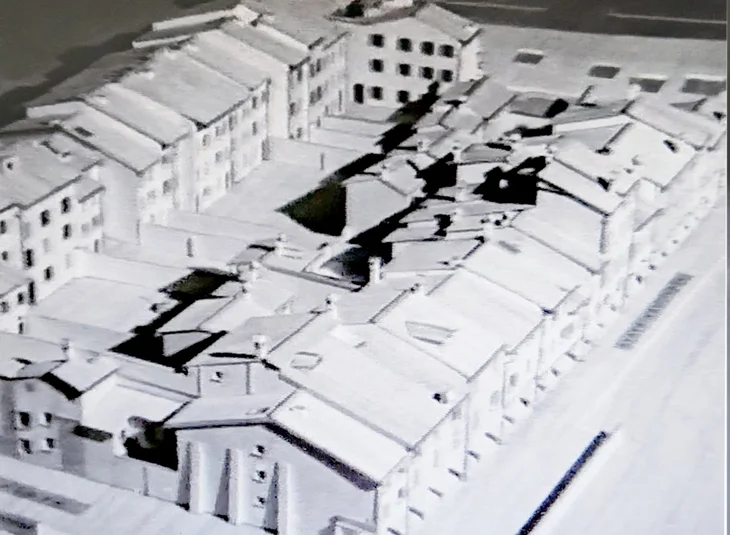
For Aymonino, an overall framework of political-social management of the city and political-technical control of urban investments could not ignore the Old Town. And the chimera in this sense was Bologna, where there was the ambitious goal of a public intervention aimed at ensuring the stabilization of the entire population, acting both in the renovation of homes and in the provision of basic amenities, affecting around 3,000 inhabitants. "Rotation" houses had even been built to house the inhabitants for the duration of the renovation and restoration works. Maintenance of the architectural features of the buildings, the porticoes, roofs and windows and internal renovation had enabled better use of the existing interiors, to equip each apartment with its own toilet, and to allocate the ground floors to commercial and recreational activities.
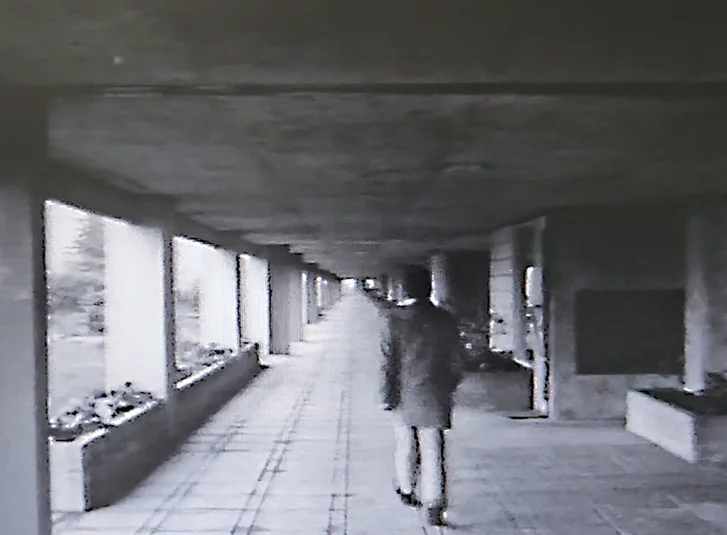
Another profitable example was recorded in some new constructions. The Housing Cooperative Movement of Bologna aspired to build a "more Human city", removed from the building speculation that left urban settlements at the mercy of chaotic growth without brakes. This Movement, with more than 90 years of experience, drew wide participation, with hundreds of members. It was organized into a consortium for the technical part and an association for political choices, supported by Law No. 167 of 1962 (and later No. 865 of 1971) for social housing, which had allowed the acquisition of land at "prices significantly lower than those of the market" and the planning of primary urbanization works (roads, sewers, lighting, and greenery). And all of this at advantageous costs: for example, in 1968-'69 100 m² of housing cost around 7 million, while, in 1974, 10 million, about 50% less than private construction. Unlike other low-cost building interventions, the aim was to provide all the services right from the start: neighbourhood greenery, parks with children's play equipment; underground garages for each dwelling; collective amenities at the base of buildings: meeting rooms, gyms, libraries; integrated shopping malls; schools of various levels strategically located according to the radii of influence and integrated into the residential fabric. The Movement's goal was to encourage the participation of its members, to arrive at urban self-management.
An interview with the architects Masi and Morelli, and the engineer Tabanelli explained better how to carry all this out. Community facilities and integration with the existing fabric, an attempt to unite the new settlement with the previous construction while safeguarding historical buildings and affective environmental values of the past.
According to Aymonino, therefore, surpassing merely technological and unrealizable utopias was possible through a utopia "linked to the concrete possibilities that exist today".
Certainly his gaze was turned to the people seen as having personal needs and requirements, a holistic vision which took into account a wellbeing that was first and foremost mental and psychological, alleviating daily difficulties through targeted functional choices. Architecture at the service of the collective good, while encouraging experimentation: this was the path he travelled and the implicit message he launched to his viewers, arguably pursuing his own utopias.
The critical spirit and the models presented with detailed apparati of video images make these television reports valuable contributions to testify to an era that came to an end along with all of its social and anthropological implications. In whose traces, however, among the nooks and crannies of such research and in the depths of a vision dictated by political conditioning and the prevailing social transformation underway, we can still find valid and valuable lessons for our present-day situation.
Carlo Aymonino's appearance on television marked a decisive step in the way architecture was described to the general public. His ability to transform a technical theme into an accessible story opened a season in which the urban project entered the homes of Italians, helping to form a new civic sensibility. In those years, television was a place of collective literacy: talking about the city meant talking about work, mobility, and quality of life. Aymonino did so with a clear language, showing models, interiors, streets, and neighbourhoods. This decision communicated a precise idea: architecture is a common good, it concerns everyone, it must be understood by everyone.
This experience left a profound cultural legacy. He taught that the project is not merely design but an interpretation of the present, interpreting needs, and able to steer social development. The episodes on television represented a precious opportunity in which for the first time the city was shown as a complex organism and not the usual background to everyday life. It was in this dialogue between research and society that Aymonino's work found its deepest meaning.
Today the role that belonged to television in the 1970s is being played by new tools. Digital languages allow for a widespread and immediate dissemination, capable of overcoming the technical barriers that often make architecture a field reserved for specialists. The social networks, if used with awareness, can become places of critical confrontation: short videos, animated maps, images of construction sites, essential explanations on the relationship between spaces and collective behaviour allow the city to be brought back into the public debate. We can show processes, not just results, and make the reasons for the choices understandable. Many architects are already experimenting with these forms of storytelling: they explain the logic of a section, the value of a pedestrian street, the meaning of a recovery intervention. They reach students, citizens, and administrators alike, creating a shared culture of space. An ideal continuity with Aymonino's insight: knowledge as a tool for emancipation.
1 "The choice of the theme is directly related to our previous research, both as regards the formation and development of the modern and contemporary city, and the theses we formulated on architectural design in relation to urban structures." The text follows with an indication of the research on which the theme was based. (Gruppo Architettura 1971). ↩
2 The titles of the eight episodes with the dates of the broadcast are shown below: The urban settlement: The house (6/4/1974); The urban settlement: The housing unit (20/04/1974); The urban settlement: Education and housing (2/05/1974); The urban settlement: The house and the sources of work (9/5/1974); The urban settlement: The house and transport (16/05/1974); The urban settlement: The territorial planning (30/05/1974); The urban settlement: Utopias and possibilities (4/6/1974); The urban settlement: the settlement unit (6/6/1974). These videos are kept at the RAI Teche archive. ↩
3 This statement was accompanied, in the same episode, by a representation of the Barbican complex from 1959 for 6,500 inhabitants (architects Chamberlin, Powell and Moya) compared to the residential complex of Gallaratese in Milan designed by Aymonino himself in 1970 for 2,500 inhabitants. The projects were documented graphically and placed side by side (Aymonino 1976). ↩
"Casabella" (1980) – Pesaro: architettura e gestione della città, monographic issue, a. XLIV, no. 456.
Aymonino C. (1975) – Il significato della città, Laterza, Bari.
Id. et al. (1976) – Piano Particolareggiato del Centro storico di Pesaro, in "Controspazio", no. 2, March-April 1976.
Bocchi R. et al. (1978) – L'abitazione, Cluva Editore, Venice.
Cina C. et al. (1977) – Il dibattito architettonico in Italia, 1945-1975, Bulzoni, Rome.
Comune di Pesaro (1974) – Il piano particolareggiato del Centro Storico di Pesaro, exhibition and catalogue by Mauro Lena.
Gruppo Architettura (1971) – Per una ricerca di progettazione 3 (a.y. 1970-71). Il ruolo dell'abitazione nella formazione e nello sviluppo della città moderna e contemporanea. Elaborazioni e alternative della cultura architettonica, con Scritti di Aymonino, Burelli, Fabbri, Lena, Panella, Polesello e Villa, IUAV, Venice.
Id. (1972) – Per una ricerca di progettazione 5 (a.y. 1972-73). Rapporto abitazioni, servizi, attrezzature. Trasformazione delle aree centrali delle città, IUAV, Venice.
Panella R. (1976) – L'ottica di un'urbanistica operativa, in Il Piano Particolareggiato per il Centro storico di Pesaro, "Controspazio", no. 2, March-April 1976.
Fig. 1 – Aldo Rossi in the 7th episode of the programme L'insediamento urbano: Utopie e possibilità (4/6/1974). Rai Teche.
Fig. 2 – Stills from the 7th episode of the series The Urban Settlement: Utopias and Possibilities (4/6/1974). Rai Teche.
Fig. 3 – Stills from the 7th episode of the series The Urban Settlement: Utopias and Possibilities (4/6/1974). Rai Teche.
Fig. 4 – Stills from the 7th episode of the series The Urban Settlement: Utopias and Possibilities (4/6/1974). Rai Teche.
Fig. 5 – Stills from the 7th episode of the series The Urban Settlement: Utopias and Possibilities (4/6/1974). Rai Teche.
Fig. 6 – Stills from the 7th episode of the series The Urban Settlement: Utopias and Possibilities (4/6/1974). Rai Teche.
Fig. 7 – Stills from the 8th episode of the series L'insediamento urbano: l'unità di insediamento (6/6/1974). Rai Teche.
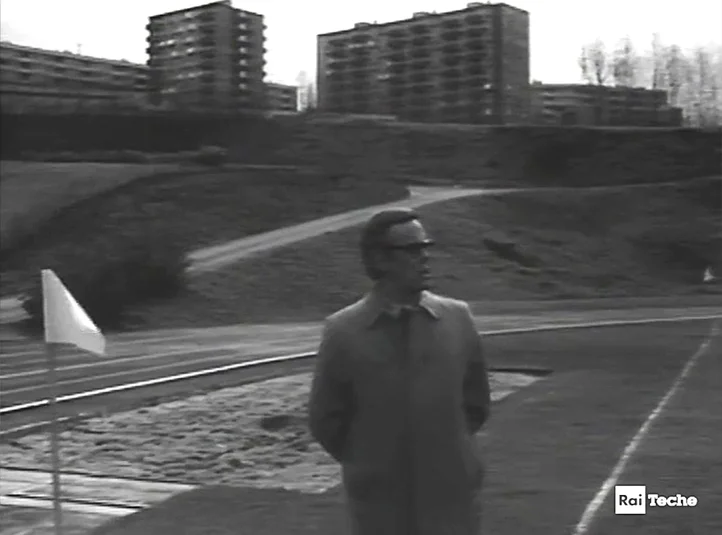
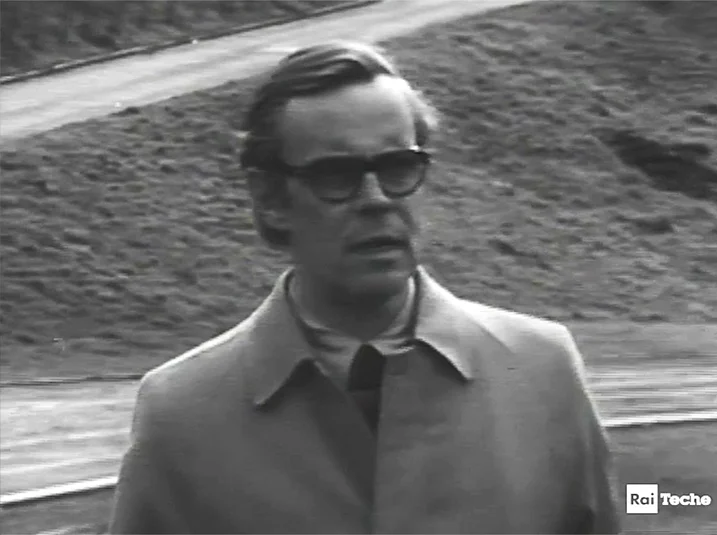
Fig. 8 – Carlo Aymonino in the 8th episode of the programme L'insediamento urbano: l'unità di insediamento (6/6/1974). Rai Teche.
Fig. 9 – Stills from the 8th episode of the series L'insediamento urbano: l'unità di insediamento (6/6/1974). Rai Teche.
Fig. 10 – Carlo Aymonino in the 8th episode of the programme L'insediamento urbano: l'unità di insediamento (6/6/1974). Rai Teche.
Fig. 11 – Carlo Aymonino in the 8th episode of the programme L'insediamento urbano: l'unità di insediamento (6/6/1974). Rai Teche.
Fig. 12 – Stills from the 8th episode of the series L'insediamento urbano: l'unità di insediamento (6/6/1974). Rai Teche.