Michela Morgante
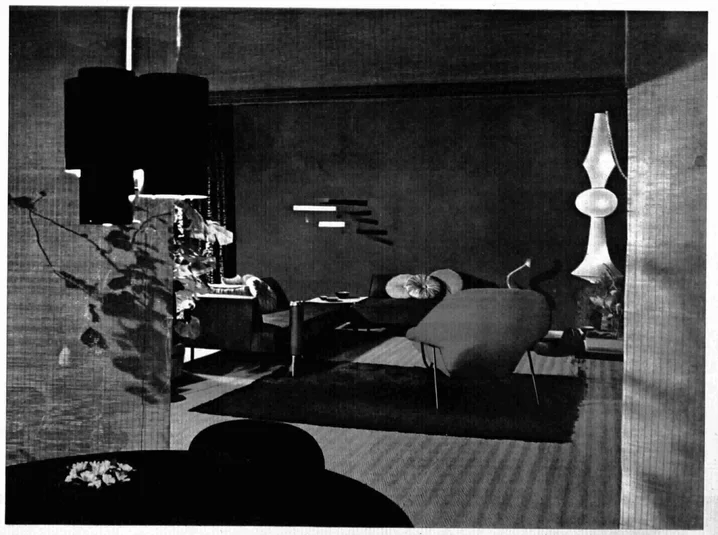
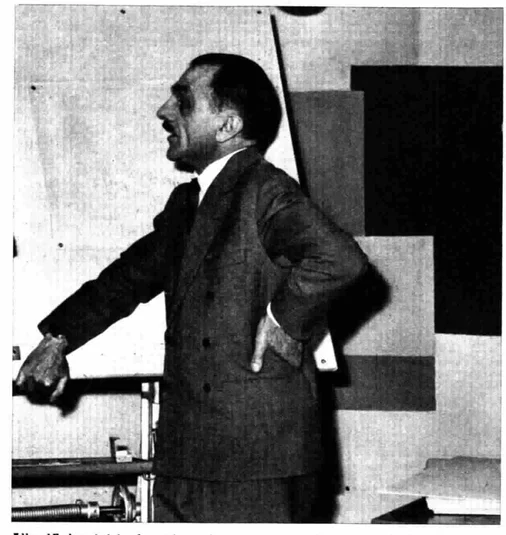
In the early days of television, space project topics were presented to younger viewers. This association is surprising, given that architecture was not yet part of the educational programming that was the backbone of the newly established state television network, but it was necessitated by a programming that was limited to a few time slots. «Easy and entertaining notions of architecture», a history of living in the form of entertainment, was the formula chosen by Carlo Mollino (Dalla palafitta al grattacielo, 1958). Mollino was the designer of the RAI auditorium in Turin and curator of a radio series on interior design for an adult audience (La nostra casa si trasforma, 1959). He was renowned for his usual refined irony: the series ended with Carlo Emilio Gadda's hilarious indictment of the flaws of modern construction, which later became a literary classic.1
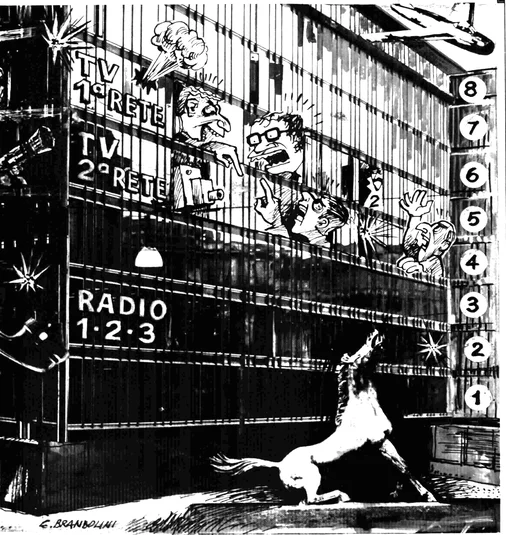
The original thematic matrix therefore pertained to the sphere of housing and interior design, seen as a way of approaching spatial issues. Incidentally, we are at a stage when television schedules are mostly produced in Milan,2 mainly in the luxurious centre of Corso Sempione designed by Giò Ponti for EIAR. The influence of the two main Italian magazines on the choice of experts involved was inevitable. At the start of the experimental broadcasts, Ernesto Nathan Rogers had already written a pilot episode of La casa dell'uomo (1953), devoted to the Unité d'habitation (Romere 2014, 82). From 1954 onwards, others followed, entrusted to Paolo Chessa and Carlo De Carli, on a varied range of topics.3
Less ambitious, but still with a distinctly Milanese flavour, was the programme Il piacere della casa (1956-1963), edited by Paolo Tilche and Mario Tedeschi. Fifteen minutes in which educational dialogues alternated with on-location reports on interior solutions. The duo gradually broadened their spectrum, having to honour the recently deceased Wright (1959), and to cover the contents and display of the XII Triennale in 1960 – a choice that the Corriere della sera branded as too specialised for the national public TV (B. 1960, 6).
From the mid-1950s, even before architecture was promoted to the dinner hour slot, the modern city also appeared on screen. This was a topical issue with strong social relevance due to the national impact of urbanism, which was, therefore, unavoidable in the TV programming, but nevertheless scheduled late in the evening. It was an important turning point: from this point onwards, the metropolis remains a strong focus of television attention, thanks to which – through the investigative and documentary format – a slow detachment from the conciliatory paternalism of the government-run RAI matures (Guglielmi 1968).
The problems of the rapidly growing Italian cities were initially addressed by «generalist» presenters and programmes focused on visually striking curiosities, such as the «skyscraper phenomenon», an icon of early television. Disciplinary urban planning was still an obscure subject for most people in Italian media culture. According to RAI it could be classified under the Cronache del futuro (1956),4 to be conveyed through examples, rhetorical questions and forms of dramatisation. The task was undertaken by the most austere among our local planners, Giovanni Astengo, a member of Olivetti's circle, who was called upon to illustrate the importance of this «new» field of action – just as he did in the press for the voters of the Comunità party.5
While the Cronache authored by Astengo were an innovative product also due to the presence of the first female director working at RAI, Alda Grimaldi, in terms of content, it was not until 1961 that a female expert was interviewed on television about architectural issues. We are in a transitional phase of the organisation, with management not yet centralised in the capital.6 And the female primacy rightfully belongs to Giulia Veronesi from Milan, an art critic who was the first in the post-war period to introduce Tony Garnier to Italy, interpreted as a precursor of rationalism (Veronesi 1948). The occasion was the InArch exhibition dedicated to him in 1961 and its RAI launch. Persico's pupil, now in her mature years, stood in an informal setting (Arti e scienze, 1961):7 Veronesi walks through the Roman countryside, the environment of Garnier's training, in search of an unlikely Italian imprint.
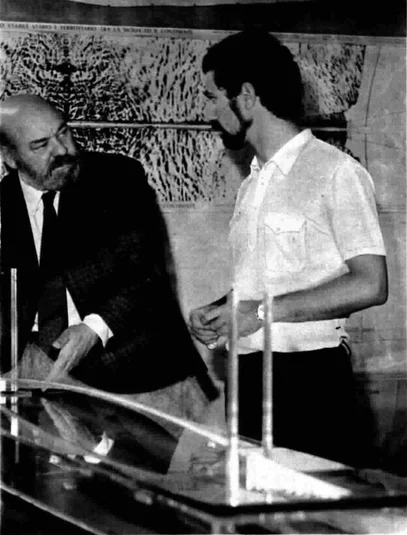
Few female specialists are involved in TV, and in any case, after the turning point of the youth protest, in a spirit of democratization of broadcasting totally anew. The popular awakening to the fate of the territory was close to the heart of Ludovico Quaroni, who had already devoted a speech to it in 1962, at the conference of the Associazione dei radio-teleabbonati. The Roman maestro had been involved in radio for a decade, but here he insisted on the particular communicative value of the new medium for a democratic debate on technical choices: namely, with decision-makers called upon to argue publicly, in front of diagrams, models and images (Quaroni 1963).
His belief in television as a means of forming a national opinion in a civilised country set Quaroni, one of the most «television-oriented» Italian architects, apart from his political party. For a long time, the left viewed the small screen with suspicion, seeing it as a source of consumption and numbing of consciences, according to the well-known polarisation mocked by Umberto Eco in Apocalittici e integrati (1964). Another champion of visual literacy among Italians, also present at the conference of the television subscribers (about three million families), took a different stance. On that occasion, Bruno Zevi ironically made reference to the boredom of «moving Alinari photographs» in TV documentaries focused on landmarks (Zevi 1963) – converging with the statements of Carlo Ludovico Ragghianti, another important theorist of the mediatisation of artistic phenomena (La Salvia 2010).
Although favourable to any new medium capable of capturing the temporality of spatial experience, Zevi initially favoured radio (Architettura e urbanistica 1956, L'architettura di Biagio Rossetti 1960), like his entire generation, due to its inherent cultural depth connected to a more mature audience. However, it was inevitable that, as a cultured yet pop provocateur, he would be involved in the television universe. One of Zevi's first and most odd television appearances coincided with a lacklustre Bauhaus exhibition at the Galleria nazionale, where the critic dismissed the teaching method practised at the German school as outdated and «formalist» (Arti e scienze 1961). The Roman interview with Gropius was assigned to another, more malleable, RAI anchorman.8
Nevertheless, Zevi was consulted on a wide range of topics, including Richard Neutra's American phase (Arti e scienze, 1961), children and urban green areas (Il cerchio magico, 1962), and the fate of Rome's historic centre (Libro bianco, 1962). The latter interview was part of a wide-ranging investigation into urbanism in the capital at the time of the new town plan – a programme that included a long historical excursus by the emerging Italo Insolera.9 A member of Italia Nostra since its inception, the architect proposed a critical view of post-unification speculation, the regime's demolition projects and the chaotic development of the post-war period. These themes obviously originated from his Roma moderna, then hot off the press, which was several times featured on RAI (Roma capitale, 1970).
Unexpectedly, we find Insolera in the role of historical consultant for L'età del cemento armato (1964), a prime-time documentary on the recently established second channel. It was the debut of a well-established series of programmes in which Italian engineering research was trivialised by emphasising its spectacular nature. Boldness and structural virtuosity were easily embodied in Nervi's works, starting with the Rome Olympics. The engineer, more than any other, was suited to television canonisation, having acquired international fame and special popular visibility linked to the venues of major sporting events.10 The theme of creative genius generated an entire gallery of television portraits, where the triad of Modernism – Gropius, Le Corbusier and Wright – stands out for its recurrence in the decades under consideration.
According to surveys in 1967, architecture was not popular among young people (G.L. 1967). Yet, that was the year in which architectural practice and history were included for the first time as an integral part of a national educational initiative broadcast on television. The subject was included in the morning slot «Art History for Secondary Schools», for collective viewing in the classroom. Among those teaching the fundamentals of the subject was Quaroni, with his television lessons on the historical function of the architect (Architettura e città, 1967) and on the masters of modernism between the two wars (Architettura Moderna, 1968); and on the other hand Benevolo, who explained once again – this time to students – Che cos'è l'urbanistica (1968). The scholar was the most sought-after expert on planning, both on panels and as a protagonist, thanks to his calm tone of argument – see his face-to-face with Portoghesi, moderated by Arbasino (Match 1978), on the disturbing urban development in Rome.
The new educational release also included a series of documentaries on the evolution of fifteen Italian and foreign cities: a conspicuous series, broadcast between 1968 and 1969, which tells us, among other things, about the success of urban history in Italy at that time (Benevolo 1968, 49; Calabi 2003, 8–11). The authors of these documentaries were an interconnected group of avant-garde academics and professionals, the core group of the Iuav during that period.11
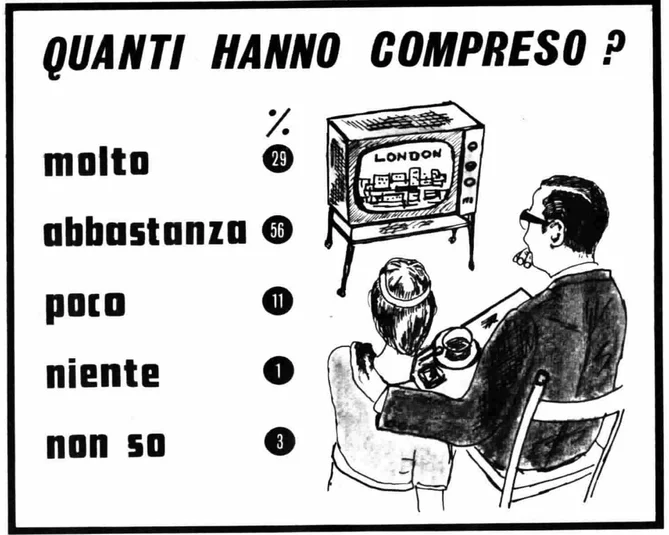
The same Roman-Venetian climate of engagement gave rise to three investigations into metropolitan issues, collectively edited by Tafuri, Stefano Ray and Giorgio Piccinato in 1967.12 It was a proposal whose problematising tone probably aroused both expectations and fears among RAI management: the first episode on London was subjected to an opinion poll, both in terms of comprehensibility and impact on viewers. After watching the programme, the sample group agreed with the authors' arguments against low-density sprawl and in favour of compact suburbs (C. G. 1974).
Also in 1967, state television launched so-called lifelong learning for adults, modelled on foreign precedents (Priulla 1977, 45). Knowledge of architecture was thus officially recognised as a subject of general culture. The programme – Sapere – was scheduled in the early evening, and consisted of about ten half-hour episodes on each discipline, from geophysics to law. It combined contributions from experts, on-site footage and practical simulations. These last «learning situations»13 were built on the basis of a script. The old RAI theme of interiors (La casa, 1967), which had been firmly in the hands of Mario Tedeschi for a decade,14 was also reformulated. Provided with actors, mobile sets and animated graphics, the aforementioned designer put a stress on the transformability of home environments, the full use of usable space and flexibility of functions. The undeclared objective was therefore to modernise the tastes of the petty bourgeoisie and spread rational lifestyles from northern Europe.
In terms of urban themes, the educational programming opened up to content of high methodological value and equal level of insight. For adult education RAI broadcast L'uomo e la città (1967), edited by Vittorio Gregotti, a ten-episode reflection with a particular emphasis on regional spatial organisation and research on geographic-scale design, which was the key focus of his Il territorio dell'architettura (1966). Shortly afterwards, Carlo Aymonino (L'insediamento urbano, 1974) imparted the essence of his method of morpho-typological analysis to high school students (Aymonino 1969). The episodes conceived by the new Iuav director were systematically structured – house, «housing unit», school facilities, industrial locations, transport networks, territorial planning, utopias of continuous expansion, «settlement units» – highlighting critical issues and innovations directly from real cases.15
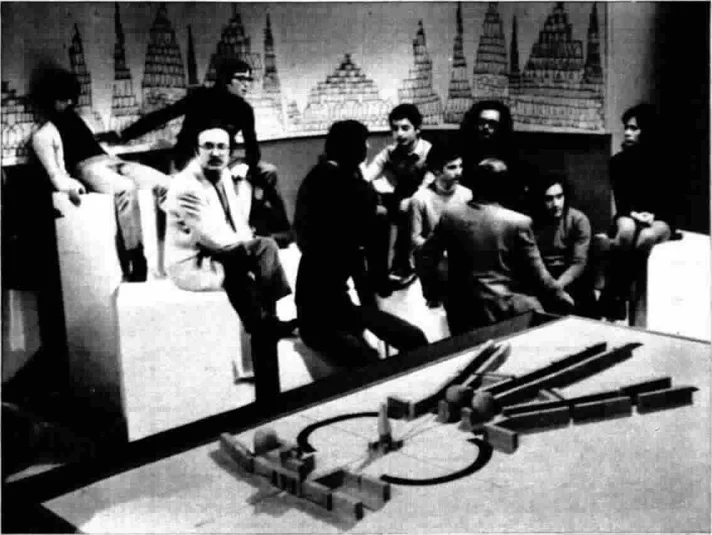
The most explicit political content in RAI's educational programming came from the universe of post-Zevi reframing of architectural history, once again under the Iuav banner. Of Tafuri's circle, which was heavily involved in educational television, Stefano Ray was the most faithful follower of Quaronian thinking. The importance of widespread architectural knowledge was constantly reiterated by Sapere – Architettura, 1970, with the message to viewers to take their own responsibility and reject any technocratic delegation. Similar objectives were set by his colleague Manieri Elia, who led discussions on reinterpreting the urban phenomena with young people in dialogue, in the TV studios (Leggere la città, 1972). In another cycle (Dentro l'architettura, 1970-77), Manieri provided an overview of universal construction, with a selection of paradigmatic works analysed in non-chronological order.16 It was a deconstructed history of architecture, in a climate of structuralism, which aimed to dismantle traditional evolutionary genealogies, in order to reveal the design and power issues underlying the interventions.
This highly political educational approach was also supported by Giulio Macchi, an innovative and prolific television writer. Macchi firmly embraced the path of science communication, being a committed intellectual who generally avoided a polemical stance. With him, the space reserved for architecture reached its peak in the programming schedules of the 1970s, for it reflected the social reality of the country and the spirit of the times. The author also attracted various criticisms: too cautious on building speculation for L'Unità, lacking communicative appeal for Casabella, and an approach far removed from real life for Radiocorriere.17
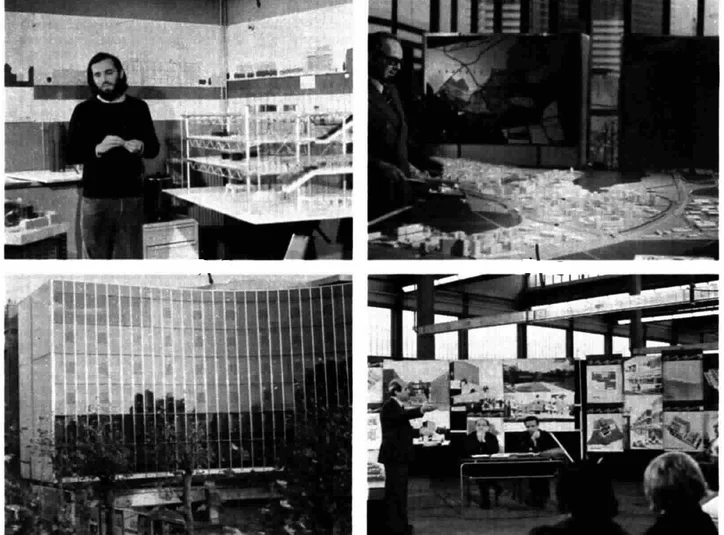
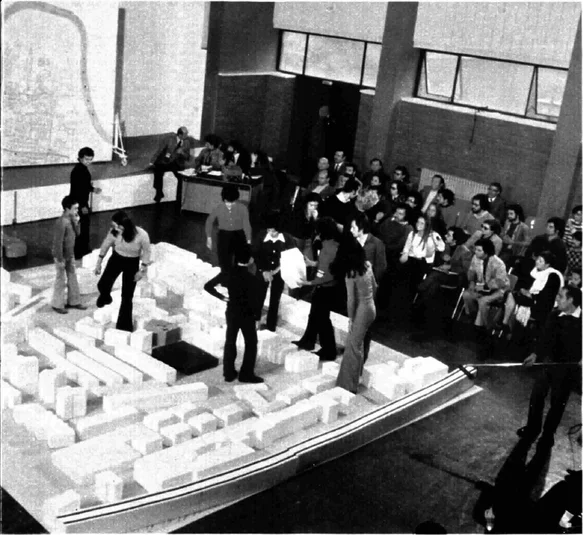
The title of his most successful programme, Habitat,18 plausibly derived from Safdie's work for Expo 67. The programme addressed the design themes within a «holistic» environmental continuum: the fruits of the best techno-ecological planning research were presented as a possible line of resistance against the visible excesses of progress (Agostini 1974). Given its stated perspective, the programme inevitably adopted an international scope (documenting works by Kahn, Scharoun, Frei Otto, Paul Rudolph, Archigram, among others) and leaned towards utopia (the theme of the mobile home, the instant city, the new Paris, participatory design). Macchi balanced the ferment in Italian universities with the voices of the masters (Quaroni, Zevi, Astengo, Benevolo, De Carlo). And in the last cycle, finally in colour, he relied on the rising star Renzo Piano for a history of construction methods conveyed by the making of «live» models (Cantiere aperto, 1978) (Ciccarelli 2018), a hymn to poor materials and elementary structures.
After a period of intense experimentation, the director closed the chapter in the early 1980s with a bleak assessment of the current methods and means of television representation of design. However, Macchi remained hopeful about the potential of digital technology for the future dissemination of spatial concerns (Zevi 1982). Thus ended, somewhat ingloriously, two decades of passionate reflection on architecture, regarded as an immersive code in the context of a presumed collective semiological consciousness (Eco 1967). The leading experts in communication declared that architecture on video was still at ground zero. We were, actually, at the dawn of a new era, that of Milano2 and private broadcasters. The dazzling comic career of designer Marenco, who rarely appeared in public in his role as a professional (L'uovo e il cubo, 1977), can be taken as a symbol of this new era of disengagement.
1 Episode Il punto di vista di un inquilino. Gadda C.E. (1959). ↩
2 In 1954 there were two television studios in Rome, five in Milan, two in Turin. Gagliardi C. (1984), Grasso A. (2000). ↩
3 Two more episodes are edited by Rogers (architectural magazines and «environmental preexistences»), two by Paolo Chessa (rationalism vs organic architecture and skyscrapers in Italian cities), one by Carlo De Carli (interior design) and one by Tito Varisco (Soviet architecture). ↩
4 Episode of 18 October. ↩
5 Astengo explains his profession for his Senate candidacy. «Galleria elettorale» (1958). ↩
6 In 1961 there were eleven television studios in Rome, seven in Milan, two in Turin and two in Naples. Gagliardi C. (1984). ↩
7 Episode Tony Garnier: precursore dell'urbanistica, 2 November 1961. ↩
8 It was Emilio Garroni, professor of aesthetics at the time and very active in television cultural programming. ↩
9 Libro bianco, episode Roma oggi e domani, 4 June 1962. ↩
10 G. C. (1957). G. C. (1960), programme Ritratti contemporanei, 1960, see Romere R. (2014), 210; programme Incontri 1961, ibid., 239; programme Orizzonti della scienza e della tecnica, see «Modelli e strutture» (1966); programme Incontri 1969, see Del Bosco M. (1969), 27. ↩
11 Tommaso Giura Longo (Amsterdam), Benevolo (Florence, Mantua, Ferrara), Insolera (Paris), Manieri Elia (Edinburgh, Palermo), De Carlo (Urbino), Aymonino (Verona, Bologna), Massimo Teodori (New York), Sergio Bracco (Brasilia), Enzo Carli (Pienza), Egle Trincanato (Venice) and Luisa Ferretti (Stockholm, Hamburg). See Educazione e scuola in TV (1978), 135-36. ↩
12 They are: Londra Problemi di una metropoli, Venezia Storia di una città, Rotterdam Immagini di una città contemporanea, each lasting 30 minutes, on the national channel. ↩
13 Priulla G. (1977), 45. ↩
14 See the TV programme La casa dell'uomo and the radio programme Viaggio tra quattro pareti, both aired in 1966. ↩
15 The following were analysed: Tuscolano, Gallaratese, Firminy Vert, Spinaceto, the city centre of Bologna, schools in Ivrea, the campus of Pesaro, the industrial areas in Terni and Taranto, the business centres of Turin, Milan and Paris, the hinterland of Naples and Metaponto, Halle-Neustadt, the Barbican, the Brunswick Centre. ↩
16 Each episode of the series focuses on one of the following: the Pyramids of Giza, the Brooklyn Bridge, the Guggenheim Museum in New York, Hagia Sophia in Constantinople, Versailles, the Karl Marx Hof, Bernini's colonnade, Palladio's Rotonda, the World Trade Center, and Brunelleschi's dome. ↩
17 Criticism respectively from: Vice (1971), Il Lonfo (1972), Fratini G. (1978). ↩
18 Habitat aired on the second channel in 1970, 1972, and 1978. In 1974, it was renamed Paese mio. L'uomo il territorio l'habitat. ↩
Agostini L. (1974) – «Con tanti auguri di buon futuro», Radiocorriere, 10, 88-90.
Aymonino C. (1969) – Architettura come fenomeno urbano, in Ciucci G., Dal Co F. (eds.), Atlante dell'architettura italiana del Novecento, Electa, Milano, 1991, 215.
B. (1960) – «TV: Le Olimpiadi e la Dodicesima Triennale», Corriere della sera, 21 August, 6.
Benevolo L. (1968) – L'architettura delle città nell'Italia contemporanea, Laterza, Roma-Bari, 49.
Bettettini G., Grasso A. (eds.) (1988) – Lo specchio sporco della televisione. Divulgazione scientifica e sport nella cultura televisiva, Fondazione G. Agnelli, Torino.
Bolla L. e Cardini F. (1994) – Le avventure dell'arte in TV: quarant'anni di esperienze italiane, Edizioni RAI, Roma.
C. G. (1974) – «Il pubblico della TV e i problemi della città», Radiocorriere, 45, 34.
Calabi D. (2003) – «La storia urbana in Italia». Città e Storia. Bollettino dell'associazione Italiana di storia urbana, 2, 8-11.
Ciccarelli L. (2018) – Cantiere aperto, Fondazione Renzo Piano, Storie, 5.
Del Bosco M. (1969) – «Il mago del cemento armato», Radiocorriere, 1, 27.
Eco U. (1967) – «Proposte per una semiologia dell'architettura», Marcatre, 34-6, December, 58-81.
Educazione e scuola in TV. Catalogo delle trasmissioni scolastiche (1978), RAI, Roma.
Fratini G. (1978) – «Dizionario umoristico delle opere e dei personaggi radiotelevisivi», Radiocorriere, 20, 65.
G. C. (1957) – «Intervista a Nervi: Il Palazzetto dello sport», Radiocorriere, 43, 12-3.
G. C. (1960) – «Holiday on ice dal palazzo dello sport in Roma», Radiocorriere, 28, 12-13.
G.L. (1967) – «Cosa vi piace di più», Radiocorriere, 43, 71.
Gadda C.E. (1959) – «La nostra casa si trasforma (e l'inquilino la deve subire)», Radiocorriere, 13, 16-17.
Gagliardi C. (1984) – «30 anni di televisione. Date momenti personaggi 1954-1983», RAI Documentazione e studi.
«Galleria elettorale» (1958) – La via del Piemonte, 19, 10 May, 9.
Grasso A. (2000) – Storia della televisione italiana, Garzanti, Milano, 27.
Grasso A., Trione V. (eds.) (2010) – Arte in TV. Forme di divulgazione, BUR, Milano.
Guglielmi A. (1968) – «La Tv ha avviato gli italiani alla lettura critica della realtà», Radiocorriere, 53, 66-68.
Il Lonfo [Giovanni Klaus Koenig] (1972) – «7000 per Leonardo Pochi per Astengo», Casabella 362.
La Salvia V. (2010) – «L'esercizio della cultura come responsabilità sociale: Ragghianti e lo strumento televisivo», Predella, 23. predella.it
«Modelli e strutture» (1966) – Radiocorriere, 9, 37.
Priulla G. (1977) – L'uso della televisione scolastica in Sicilia. In Gozzer G. e Priulla G. (eds.), La televisione a scuola. Esperienze nell'uso di tecnologie educative in Italia, Il Mulino, Bologna, 45.
Quaroni L. (1963) – La TV e l'educazione urbanistica. In Rai come servizio pubblico, Proceedings of the national conference of the Associazione Radio-Teleabbonati, Biblioteca dello spettacolo, 195-99.
Richeri G. (1977) – Università territorio e televisione, Casabella, 423, 26-7.
Romere R. (2014) – In arte RAI: i documentari sulle arti figurative tra storia aziendale e divulgazione culturale (1953-1962), degree thesis, CdL in Storia delle arti e conservazione dei beni artistici, Ca' Foscari, Venezia, 82.
Veronesi G. (1948) – Tony Garnier, Il Balcone, Milano.
Vice (1971) – «Controcanale», L'Unità, 20 October.
Zevi B. (1963) – Urbanistica e architettura. In Rai come servizio pubblico, Proceedings of the national conference of the Associazione Radio-Teleabbonati, Biblioteca dello spettacolo, 191-94.
Zevi B. (1982) – «Nodo e sfida: la comunicazione architettonica», L'Architettura. Cronache e storia, 315, January, 5.
Fig. 1 – Interiors by S. Asti and S. Favre, featured in the programme «La nostra casa si trasforma» (Radiocorriere 10, 1959).
Fig. 2 – Carlo Mollino, programme «Dalla palafitta al grattacielo» (Radiocorriere 19, 1958).
Fig. 3 – The RAI headquarters in Rome, Viale Mazzini (F. Berarducci, A. Fioroni 1962-65), in a humorous drawing by G. Brandolini (Radiocorriere 48, 1977).
Fig. 4 – Ludovico Quaroni with the director of a programme on the Strait of Messina Bridge (Radiocorriere 40, 1970).
Fig. 5 – Illustration related to the opinion poll conducted among viewers of the programme «London. Problems of a Metropolis», 1967 (Radiocorriere 45, 1974).
Fig. 6 – Mario Manieri Elia moderates the debate among young people in «Leggere la città» (Radiocorriere 7, 1972).
Fig. 7 – Scenes from «Paese mio»: Piano and Vitale in front of the model of Créteil, the PCF headquarters by Niemeyer, Giulio Macchi among projects and guests (Radiocorriere 10, 1974).
Fig. 8 – Young people interacting with a model of a Roman neighbourhood during an episode of «Paese mio» (Radiocorriere 17, 1974).