1 / 1
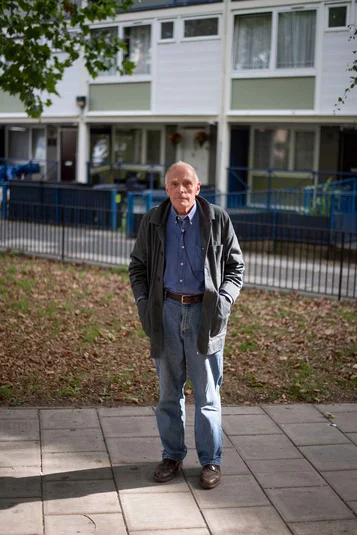
Fig. 1 – Richard Wentworth, Islington, 22 September 2022.
↓ read full caption
Matthew Blunderfield
Scaffold began in late 2018, when I was still working as an architect in London. By that point I had been practicing for four years, long enough to start ceding my idealism — that architecture could envision and enact new ways of living — to the realities of professional practice: value engineering, consultant coordination, planning constraints, political maneuvering. All the things that keep the machine of building moving forward, and that gradually close the doors on the expansive questions that drew me to architecture in the first place. I thought of the early interviews I was recording as a wedge I could stop those doors with, keeping them open a little longer.
If you're going to start an architecture podcast, London is one of the best places to do it. The city hosts a deeply informed and ideologically diverse chorus of voices, fostered by its architectural legacy and its density of schools and cultural institutions. Scaffold began independently, but it continues to exist thanks entirely to one of those institutions in particular — the Architecture Foundation — through which the project has been produced since 2018.
The format has barely changed since I began. Typically there is just one guest, in one long conversation. The landscape around the podcast has changed considerably though. I've remained an avid podcast listener, but when I started, I was listening to programmes like Bookworm, Longform, and The Organist, all of which have now gone. They were reflective, meandering shows descended from public radio, and they treated conversation as something serious and sustaining. I loved their rigour and their commitment to ideas that weren't necessarily timely. More than anything, they were intimate, full of suspense and emotion in a way that only seemed possible through the event of conversation, where the voice works in collaboration with the mind. Today my podcast feed fills up with news analysis, polarizing commentary, and shows promoting ways to improve my earning power, fitness and well-being. Instead of being exposed to ideas to grapple with, I feel spoon-fed positions and protocols. Scaffold has tried to resist that drift, embracing something slower and more willing to risk interpretation, more attentive to tracing out new thoughts with guests as opposed to having them perform from a script. The medium itself helps. In a conversation, most of us are not speaking to be clipped and shared; we speak to connect with the person across from us. Ideas can stay provisional and develop in real time. The podcast has more in common with a real-world encounter than with what the internet has become; it aspires to the pleasures of a long meal, versus the blunt efficiency of the feed.
I studied English literature before I studied architecture (my university didn't offer architecture as an undergraduate degree), and to me fiction and architecture have never been far apart. Architects, like writers, are speculative creatures, thinking deeply about how people live. The novelist, like the architect, is a keen observer of environments and behaviour. In some ways, buildings are not unlike texts. Both are open to interpretation; they are expressive and legible if you learn how to read them.
The name of the podcast carries something of this attitude. A scaffold is temporary, provisional, a thing that allows another structure to come into being. Language has the same relationship to architecture: it builds frameworks that let us read and interpret buildings, and it can just as easily obscure the thing itself. The interview is scaffolding in that sense — a temporary support that, if built well, lets meaning take shape without getting in the way.
This is why Scaffold has never been about architecture in the narrow sense. I invite artists, poets, industrial designers, landscape architects, people whose work expands my sense of what architecture touches and is touched by. The podcast is a way of finding architecture beyond conventional frameworks of understanding, defined less by the boundaries between it and other disciplines than by its entanglements with them.
Part of why this felt urgent was the widening gap between academia and practice. The atmosphere of schools today is often marked by doubt and hesitation in students. In their concern for the harms caused by architecture, they have opted to analyse and critique rather than to design and propose. In practice, meanwhile, architects are consumed by the logistics of specification and coordination, with little time to reflect on the deeper meaning and ambition of their work. The poles of academia and practice rarely meet, and in fact feel as if they are drifting further apart. Scaffold tries to inhabit the space between them, letting the contradictions surface and keeping architecture alive as a cultural practice rather than a closed system.
My sensibility was shaped as much by literature, blogs, and radio as by architecture. As a student I was absorbed by Geoff Manaugh's BLDGBLOG, which in its search for new ways of seeing the built environment was equally interested in storm drains, planetary geology, science fiction, and ruins as in actual buildings. From there I found J.G. Ballard, whose novels revealed the inner strangeness of everyday landscapes — the office park, the motorway, the high-rise as psychological terrain. And I read Cabinet magazine, which introduced me to the sprawling polymathic ideas of people like D. Graham Burnett and Steven Connor, who showed me that criticism could be playful and enchanted. Rarely did academic writing feel so alive.
Then there was Michael Silverblatt's Bookworm, which I listened to religiously. Silverblatt treated the interview as an art form, revealing to novelists and poets thoughts that illuminated their work in new and surprising ways. He read every book his guests had written before speaking with them, and his attention was so total that David Foster Wallace once asked, on air, if he would adopt him. For me, listening was often an ecstatic experience, like going to church. It's an experience I rarely achieve with my interviews but one I always strive for.
Editing is, it must be said, a crucial part of the process. While I aim for an hour-long episode, I often record for two, sometimes three hours before cutting the tape down to the most essential parts. Even then, they are probably too long. Still, the experience of interviewing is not unlike the process of panning for gold — there will often be a lot of silt and sand in both my questions and my guest's responses. As we grow more comfortable and open to each other, the flecks of gold start to appear.
What this looks like in practice is hard to predict, and that's the point. When I interviewed the architect Jamie Fobert, we spoke about his genteel, even stoic facades, and the inner complexities they concealed, before he began to reflect on the double life he led as a gay architect in the 1980s, and the profound aesthetic experience he had as a child attending church. The anecdotes didn't resolve into a single reading of his work. Together, though, they made it newly legible. Interviewing Richard Wentworth, we recorded on a walk through Islington, where he stops occasionally to take pictures for his ongoing project Making Do and Getting By. As we made our way along a canal, down a street, across a housing estate, he photographed makeshift solutions and improvisations in the landscape. Each image he made and each detail he noticed produced a chain of associations that wouldn't have surfaced otherwise. He was performing his thought process for me in a way that's rarely revealed. And meeting more recently with the architect Tony Fretton, I found him cooking lunch as we spoke, his digressions following the rhythm of stirring and tasting. At one point I offered to check the stove for him, with unspoken concern for his age. The insistence in his voice that he do it himself carried a faint trace of frustration, a small denial of the limits imposed by an aging body.
Architecture is fertile ground for this kind of attention. While language is the writer's currency — which is partly why writers often give the best interviews — for the architect, meaning resists words. The most honest expression of a building is its material presence; any description is already a translation. Audio is, in its own way, surprisingly spatial. Stripped of images, speech has to do more work — identifying what's essential about a scene, which itself carries auditory hallmarks like the birds on a canal, the hiss of a gas range, or the small sounds of a studio. The interview can't replace the building, but it lets us glimpse the lives that shaped it.
Baglione, C. (2008) – Casabella 1928-2008, Electa, Milan.
Cacciari, M. (1984) – "Un ordine che esclude la legge". Casabella, 498-499 (gennaio-febbraio).
Croset, P. A. and Bonino, M. (2009) – "Casabella 1982-1996. Auteur de Vittorio Gregotti ed du 'réalisme critique' en architecture". Les cahier de la recherche architectural et urbaine, 24/25 (dicembre).
Gregotti, V. (1982) – "L'ossessione della storia". Casabella, 478 (marzo).
Gregotti, V. (1986) – Questioni di architettura. Editoriali di Casabella, Einaudi, Turin.
Gregotti, V. (2005) – "Fabbricare riviste. 1996". In Autobiografia del XX secolo, Skira, Geneva-Milan.
Gregotti, V. (2014) – 96 ragioni critiche del progetto, Rizzoli, Milan.
Secchi, B. (1982) – "L'architettura del piano". Casabella, 478 (marzo).
Secchi, B. (1984) – "Le condizioni sono cambiate". Casabella, 498-499 (gennaio-febbraio).
Fig. 1 – Richard Wentworth, Islington, 22 September 2022. The interview with Richard Wentworth was published as episode 70 of the Scaffold podcast.