Giulia Furlotti, in conversation with Felipe de Ferrari
A good interview is always, at least in part, a form of mutual exposure. On this occasion, that awareness imposed itself with a certain irony, as I found myself interviewing an architect who has made the interview one of the principal instruments of his architectural research. Felipe de Ferrari, an architect and professor trained in Chile and now based in Europe, is one of the founders of OnArchitecture, "an online audiovisual archive of architecture." It is, in fact, a vast and carefully selected collection of videos on the contemporary, directed and produced by the two authors.
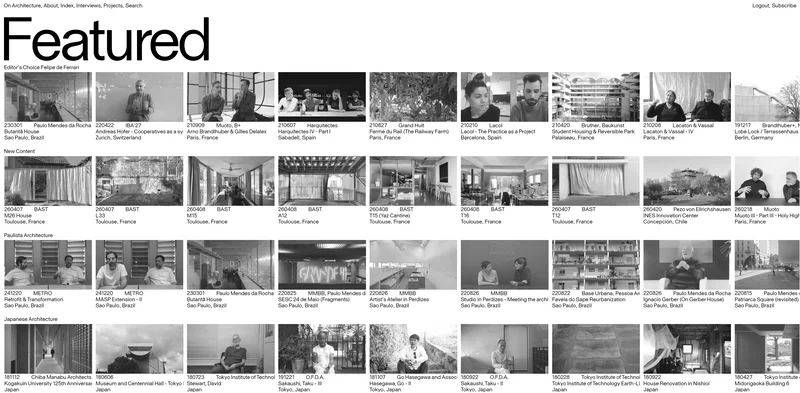
Upon accessing the platform, the graphic approach clearly reasserts the centrality of the video product. Information and supplementary content are kept to a minimum, a selected video occupies the centre of the screen, accompanied by a concise caption, and is followed by a selection of videos labelled "Editor's Choice". The structure of the website remains clear and minimal on the subsequent pages as well, while the menu immediately makes evident the division of the content into two broad categories: interviews and architecture videos.
The two types of videos are clearly identified through specific directorial choices, which remain rigorously consistent in stylistic terms throughout the extensive catalogue. On the one hand, the interview videos, with a fixed camera, which portray exclusively the architect, while the interviewer remains off-screen. The result is a form of discourse that is almost autonomous, very close to a monologue, from which even the questions have been removed. The duration is considerable, in some cases reaching up to forty minutes of footage, with the material occasionally structured into thematic chapters under broad headings. The quality of the interlocutors is such that any selection would necessarily be partial, since among the many figures present in the archive are Smiljan Radić, Alejandro Aravena, Bernard Tschumi, Paulo Mendes da Rocha, Lacaton & Vassal, Sou Fujimoto, and Toyo Ito, among others.
The second category collects instead videos dedicated to architectural works. Again, the camera is fixed, but the videos are animated by people walking through and using the spaces, by variations in light, by environmental movements. The shots appear carefully constructed, often symmetrical, and are organized through static takes lasting a few seconds which, once edited in sequence, offer a reading of the building that is both concise and precise. These are generally short videos, under five minutes in length, although in some cases they may extend to fifteen.
What is striking in both formats is the programmatic absence of a traditional explanatory apparatus. There is no critical commentary accompanying the works, no contextualizing texts, and no plans or drawings appear within the interviews. At first glance, though the interview itself will show how partial this reading is, the figure of the curator seems almost to withdraw.
This interview thus arises from an attempt to conceptualize OnArchitecture not so much as an archive of audiovisual materials, but rather as a cultural project. By retracing the stages of its development, it seeks to reconstruct the project's relationship with the Chilean context and with international architectural culture, its distance from other digital platforms, and its gradual transition from a student initiative to an archive capable of generating critical reflection, addressed also to schools and research communities. It will also investigate the extent to which video may be considered a pedagogical tool: not merely a medium for communicating architecture, but a means of constructing relations between ideas, works, and authors.
Giulia Furlotti: I would like to open this interview in the most conventional way, by retracing the origins of the project. The earliest videos currently accessible on the platform date back to 2008, a relatively early moment in relation to the digital era in which we are now immersed, especially if one considers that, at the time, video was still a scarcely consolidated tool for the online documentation and transmission of architecture. In what context did OnArchitecture develop, and what conditions made its emergence possible?
Felipe de Ferrari: I first came to Europe in 2006, with the intention of enjoying visiting the cities and a strong interest in the direct observation of architecture, almost as an extension of the kind of study one undertakes during university years. While speaking with one of my closest friends, another Chilean architect, Sebastián Paredes, the idea emerged of sharing the experience I was having. We concluded that we should start a blog, but one based not on text, but on images, on video. We were already consumers of blogs, and an important reference for us was PLOT, which was already using video as a tool to present certain projects.
In retrospect, I also believe that this choice was rooted in a formation strongly marked by television culture. Television was a constant presence in everyday domestic life and, although it was not something I reflected on critically at the time, it represented a continuous point of reference. During my years studying architecture, for instance, I remember the television always being on in the background, contributing implicitly to the development of an interest in visual culture; I would say especially television culture, rather than cinema.
GF: It is difficult to believe, because your shots are very cinematographic.
FDF: Yes, because we learned. I grew up in a rather ordinary Chilean city, without any particularly strong cultural stimuli. When we began studying architecture, our background did not include references such as Godard or Italian cinema; we watched football matches and reality shows, content very much connected to popular culture. But, as I was saying, we were already very interested in the video format. We began to use it in a completely experimental and non-professional way, essentially through moving shots, on foot or even by bicycle. During my trip through Europe, I would visit as many as five buildings a day, and then we would begin editing the material I had filmed.
We were still students, and this aspect was closely connected to another fundamental element: the collective work within the school. When we realized that we had effectively created a platform with an audience, we also understood that we needed help. We began to involve other people, friends and colleagues, who discussed the work critically with us and contributed to the editing and translations. It was not a structured system: we were students collaborating with one another, without interns or a formal organization. Still, younger students would take care of the transcriptions, which was the most tedious part [laughs].
We were, of course, as young people often are, very ambitious. I remember, for example, that we sent a rather cheery video to OMA, which had been a major point of reference for us during our formative years. And at a certain point, we actually received a reply! They said they had found the video very interesting and asked whether they could use the material on one of their platforms. We were in China at the time, and that recognition struck us deeply. From that moment on, we began to work more and more intensely on the project, and gradually introduced the interview format as well.
The entire project was, in a way, a reaction to platforms such as Plataforma Arquitectura and ArchDaily, both of which had emerged from the same academic context in Chile, within our university. When we began to grow, they even invited us to collaborate with them, but our position was rather critical. It seemed to us that their platform lacked a real editorial project, and that it functioned more as a system for aggregating content, without a clear intentionality. Their discourse around the "democratization" of architecture also appeared unconvincing to us at that stage. At the same time, it immediately became clear that it would be impossible to compete with that model. These were platforms capable of publishing dozens of pieces of content every day, simply by collecting and relaunching material produced by professional offices. We, on the other hand, worked in a completely different way, producing the videos ourselves, which made any comparison on a quantitative level entirely impracticable.
We recognized that there was no point in pursuing that direction, and began to reflect on our audience and on the possibility of sustaining our work economically. There was an audience interested in video content on architecture, and that was where we needed to focus our attention. At the time, the website was free, and we did not want to introduce advertising. We therefore opted for a paid subscription model, also thanks to the support of a small but significant group of supporters – including editors, architects from our school, and professionals we had come to know through our documentation work – who agreed to subscribe.
And yet we had a basic conviction: we did not want to base our livelihood on individual users by asking them to pay for membership. We ourselves consumed a great deal of material that we found freely on the internet, and it seemed wrong to ask individuals to pay in order to access the content.
At that moment, a significant coincidence occurred: AHO, the Oslo School of Architecture and Design in Norway, contacted us asking to subscribe to our archive. We received a formal email that surprised us, also because the platform was not yet structured to handle institutional subscriptions. We decided nonetheless to grant access, but in exchange we asked for critical feedback that could help us reformulate the project.
At that time, it was still a student initiative, not particularly structured from a professional point of view. With AHO, and shortly afterwards with our own university, the Pontificia Universidad Católica de Chile, we set up a kind of pilot phase: we gave them access to the content and, in return, received operational feedback, for instance on the need to improve indexing, integrate metadata, or reorganize the material. Drawing on these suggestions, we redesigned the platform and developed a new website, equipped with a search engine and conceived as a product better suited to the needs of research and libraries. Through this transition, the objective gradually shifted from the desire for individual visibility toward the construction of an archive, which implies different temporalities and modes of use, more closely aligned with cultural and academic contexts. This initial phase dates to around 2009, and the project has continued to develop from there.
To summarize, and to give you a clearer overview, the project originated in 2006, when we were still students. Between 2006 and 2008 we produced highly experimental and still rather immature videos, which is why the materials currently available begin from 2008 onwards. There are, for example, earlier interviews, such as those with Mark Wigley or Bjarke Ingels, that were not kept online because we came to recognize their limitations. There is also an interview with Rafael Iglesia, a very interesting Argentine architect who passed away around ten years ago, which was the first in the entire series but is no longer available today, precisely because it belongs to that initial phase.
This transition also marked a broader change. We began to study cinema more closely, questioning our own way of filming, which at that point was still tied to recording in motion and increasingly seemed to us an artificial way of representing architectural space.
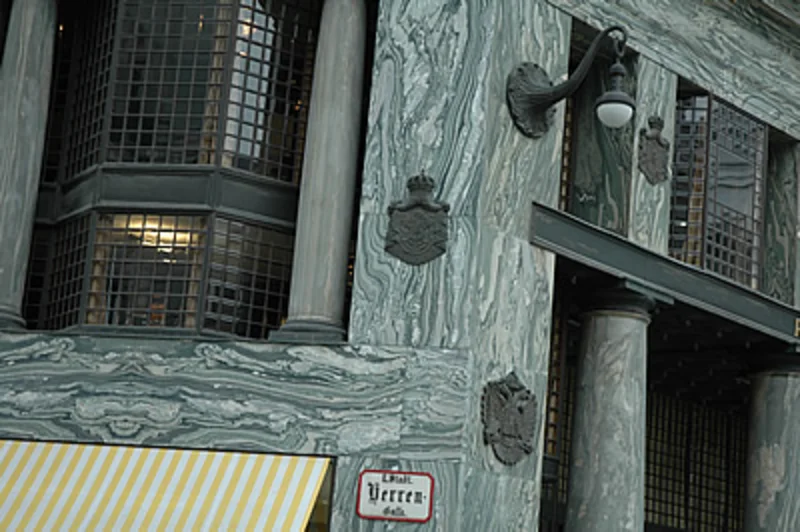
And it was during that period that we discovered the work of the German documentarian Heinz Emigholz. This was very important for us, because Emigholz is not an architect; he is a filmmaker, a documentarian, but he produced a series entitled Architecture as Autobiography. He portrays buildings by often overlooked architects, such as Loos, Neutra, or Sullivan, developing his own grammar of filming, a highly personal way of shooting, with shots that are often "broken," not perfectly straight, rather unusual, and mostly static, with very few movements within the building.
We were strongly influenced by this, and began to tell ourselves that, as architects, we wanted to learn from this approach. The ideal would have been to make it possible to compare individual shots, creating a document through which comparisons could be established.
GF: I am particularly interested in an aspect you have referred to while retracing the origins of the project, meaning the difference in approach that seems to underpin this "dualism" within OnArchitecture's audiovisual production. On the one hand, there are the interviews, which, as you anticipated, emerged almost in reaction to a certain type of online architecture aggregator; on the other, there are the architectural recordings, which I would describe as almost poetic, if you allow me the term, yet at the same time highly explanatory. As you were saying, they are truly tools of analysis, as they make it possible to understand the project, to establish critical comparisons, and to grasp its uses. In some way, the two formats appear to function as complementary instruments: on the one hand, architectural theory, the explanation of architecture; on the other, its figuration. Even in interviews in which architects speak directly about a specific project, no images appear, nor are there plans or architectural drawings. Why such a radical choice?
FDF: It is closely related to the kind of culture in which we were formed at that time. One could say that we were, and I think still are, very critical, and that this project emerges precisely from that critical stance. We were tired of a certain kind of interview, in which the questions always revolved around formulas such as "what is the role of the architect?" or "what is architecture for you?"
These questions are not banal in themselves, quite the opposite, but they were treated as if they were, in a superficial and repetitive way. They did not contribute to building a discourse, but merely collected generic, almost interchangeable opinions. From this came the idea of adopting a different approach to architectural culture and to the way it is constructed.
We decided to work with video, and through video we also intended to react to a certain way of representing architecture, typical of some monographs or journals that we frequently consulted, but which often seemed artificial to us. I remember the comment of a professor, who said, "It is suspicious that photographs of a building are always taken in the best weather and under perfect conditions."
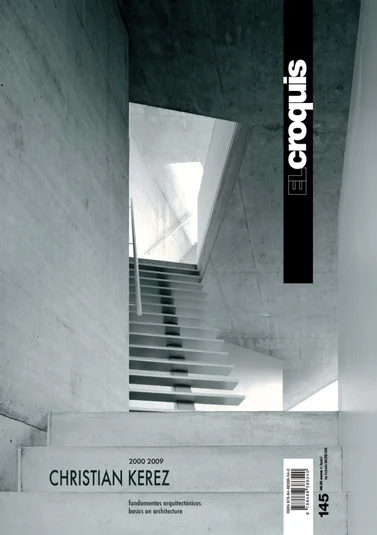
For us, this was already a fact. For example, we received an issue of El Croquis dedicated to Kerez, Swiss architecture, entirely in concrete, extremely refined, with no people in the image, no trace of life. On the cover, one sees a glimpse of a staircase and asks oneself, "is this architecture?"
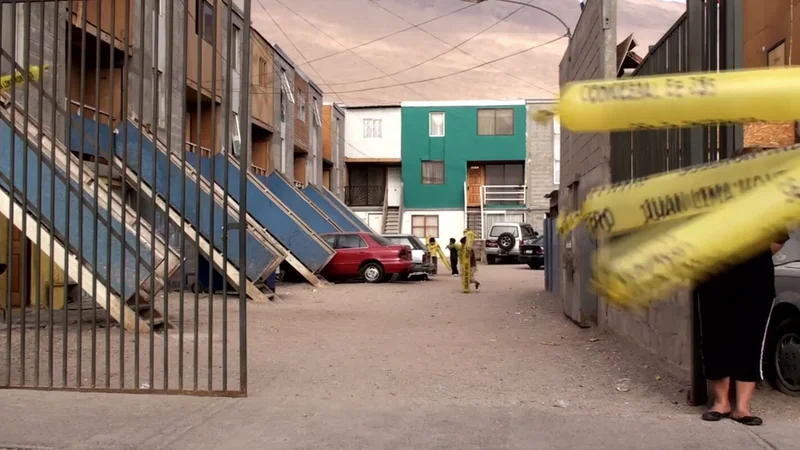
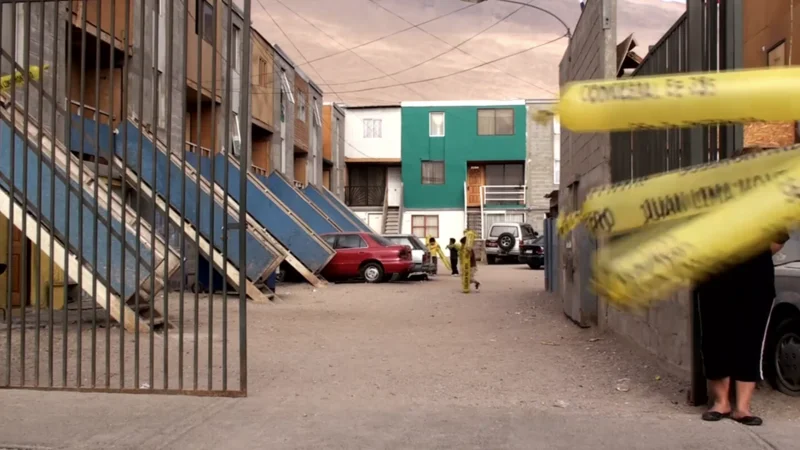
We began to think that it was necessary to look for the real uses of buildings, to visit places, and to gain access to what the media normally does not show. Quinta Monroy by Elemental, in reality, resembles a favela much more than the controlled and idealized image circulated in publications. At that time, we were very interested in the idea of reality, in the way architecture ages over time, and above all in the contradictions that emerge in spaces through everyday use, including improper uses, transformations, and people's appropriations of space. For us, it was essential to bring these aspects to light.
At the same time, we were not entirely convinced by the traditional interview format. We believed more in the tradition of oratory, in the narration of an idea. For this reason, we decided not to construct videos filled with images intended simply to animate boring interviews with architects. We wanted to maintain a very direct form, in which what matters is the argument, the discourse. We also did not want to appear in the videos ourselves. Rather, we were interested in constructing a kind of monologue, one capable of introducing and making legible the ideas of the architects being interviewed.
And this is because, and I would say this is where the main difference from platforms such as ArchDaily lies, from the very beginning we knew that we wanted to design, and that we wanted to be directly involved in the practice of architecture. The interviews and the editorial work developed in parallel with a process of learning from figures we deeply admired. For us, it was a privilege, for example, to be able to meet Pier Vittorio Aureli in 2009, or Anne Lacaton and Jean-Philippe Vassal. Had we not had those encounters, we would probably have completed our education with different references and different ideas, and we would have become very different architects, and very different people. Those experiences transformed us.
I myself interrupted my final diploma work for a semester in order to travel through Europe and conduct interviews, and this opened up the possibility of discovering new cultural and design models. For example, it was through reading Aureli's The Project of Autonomy that I began to take a real interest in politics. I was already very critical of neoliberalism in Chile, but I had never felt the need to engage with it more deeply or directly. That book marked an important turning point. From there, I began to take an interest in Italian post-Marxism and in certain theoretical and political movements. I realized that in Chile there was an entire generation addressing similar issues, sharing similar references and positions. One of them was also the current Chilean president, who at the time, around 2012, was one of the leaders of the student movement. His positions later shifted toward a more moderate social democracy, but in that initial phase the context was very different. We became closer to that movement and collaborated on several political campaigns.
In this sense, I would say that figures such as Pier Vittorio Aureli and Lina Bo Bardi played a decisive role in the formation of my political imagination. Through Lina Bo Bardi, for instance, I discovered Gramsci. She discussed him in the Brazilian context, and this led me to read his texts in full.
GF: Retracing the history of the project, it seems clear that OnArchitecture is, at least in part, a reaction to the Chilean political and cultural context, but also a product of that same context. Added to this is the fact that some of the online architecture platforms now best known internationally were developed within your own university, or at least in close relation to that environment. Do you think this influenced the birth and evolution of the project, from a cultural, political, and academic point of view?
FDF: Certainly. To clarify, because this point is important to me, as students we had a rather suspicious attitude toward student movements. We had reached a level of criticality that led us to say, "they take to the streets, they protest, but in the end nothing changes." For this reason, during the final years of university, we concentrated almost all our energy on this project. We were not only making videos, but also organizing events within the school, as a form of cultural activity and a way of discussing and circulating ideas. In a sense, we were working in parallel with the student magazine, which dealt mainly with political and urban issues. We were friends, but our interest was slightly different. We wanted to talk about architecture, though not only in formal terms. We wanted to listen to figures such as Lacaton & Vassal, for example, and to build a discourse around those kinds of positions. At the same time, as I mentioned, we were also reacting to that group of platforms that functioned mainly as content aggregators. We were not convinced by the concept behind them. The idea of the "democratization of architecture," in that context, seemed to us in some way naïve, if not actually false, because those platforms were in fact generating significant profits from that model.
That said, one has to consider, and it is important that you pointed this out, that Chile is probably one of the most extreme neoliberal laboratories. This means that everything is turned into a commodity. In some way, every aspect of life is marketized. And I would say that, as individuals, there is only so much one can do. It is not easy to fight or react frontally. One can try to resist, but the system is so pervasive that it becomes part of the culture itself. For example, almost every weekend I would go with my family to malls, to shopping centres. That was the family event. We did not do sports, we did not go to parks. We really went to the centre of the empire, travelling all the way to Santiago to spend the entire day there, walking around and visiting shops inside a closed environment. I hated it, but in some way this too was part of our culture.
GF: OnArchitecture is a project with a very small structure. It is essentially the two of you, and there is no real scientific or editorial committee in the traditional sense. You have already mentioned that the selection often emerges from personal interests, from figures who arouse your curiosity or whom you admire. What kind of knowledge, or what idea of architecture, do you seek to transmit through this selection?
FDF: Until last year, for twelve years, there were only three partners, and the third person was an investor, a psychologist. I would say that almost all of the content was produced by Diego Grass and me. There are a few exceptions, but they are very rare. It is therefore a very small structure. It was never really a collective. At the beginning there was a group of students, but the project gradually stabilized into a much smaller organization.
As for the selection of content, I would say that until Diego was a partner at Plan Común, that is, until 2016, we carried out the vast majority of the interviews together. It was more demanding work, because it required us to discuss them beforehand, prepare the questions, and construct a shared point of view. When Diego left the office, we understood that the best way to continue would also be to divide the production of content. In a sense, it no longer made sense for us to be recognized as a single entity. It was more accurate to allow two people with different interests to emerge, also because he had left the office precisely in order to pursue other directions.
At the basis of the project, however, there is the conviction that architecture is a common field of knowledge. This is very important for us, because of course we know which architecture interests us, and we also know what we do not consider to be good architecture.
Furthermore, still with regard to the question of what to transmit, one thing we understood as soon as we began interviewing people and meeting many architects is that there is this endless, and rather vicious, debate about whether architecture is political or not. This can also be seen in the Biennials: one is more oriented toward activism and the social, the next returns to form, then again to the social, then to ecology, sometimes with rather questionable outcomes, as seems to have happened in the latest one, and then back again to form. It is an endless debate, with people who want to talk about democracy and others who do not want to talk about it at all, preferring instead to discuss ambiguity or autonomy. An interminable and, often, unproductive debate.
Until, also thanks to the position expressed by Susan Sontag, we understood that it was not necessary to decide. One does not necessarily have to choose between one thing and another. One can have one, and one can also have the other; then one can try to construct a synthesis, or a hybrid. And the hybrid, in the end, is often more interesting, because it allows for a more relational form of thinking, capable of establishing even unexpected connections, for example between Dogma and Raumlabor in Berlin, to mention two very different practices. Learning from both sides, or from many different sides, is much more interesting.
Naturally, this is also a position from which we ourselves have benefited. I can interview a scholar of Cedric Price simply because I am interested in Cedric Price, and have a good conversation with him. Then I can move elsewhere. For example, two days ago I contacted Bernard Tschumi to talk about the Parc de la Villette, because I really like it and I cross it every day.
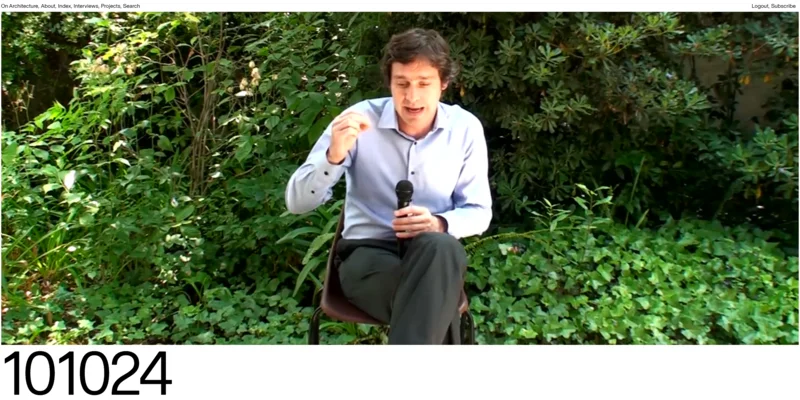
Another important figure for us, for the creation of our position, was Enrique Walker, a Chilean researcher, who a few years ago directed the Master in History and Theory at Columbia. He is a very interesting figure. Enrique had already done interviews before us and had published a book with twelve architects, including Tadao Ando, Toyo Ito, maybe Tschumi, I don't remember exactly. We interviewed him precisely on the topic of the interview: on how to approach it, how to construct it.
It was a very interesting conversation. He said something very intelligent to us, namely the idea of constructing one's own agency through questions. It is not simply a matter of placing a microphone in front of an architect and saying, "say something intelligent." We have our own arguments, we have a position, and this position is in some way hidden in the way we formulate the questions. Some architects notice this, they are aware of it; others simply talk. But some people say to you, "Actually, with this question you are criticizing me." Aravena, for example, in the last interview in 2010, told us, "Every time you ask a question, I have the feeling that you want to kick me in the balls." And it was true, it was absolutely true.
This was our way of conducting interviews. Of course, we are more accommodating with the architects who interest us most, or whom we hold in higher regard. But for us, this aspect was very important.
GF: After what you have said, I feel very self-aware about the next question, so I will ask it directly: do you consider yourselves artists or pedagogues?
On the one hand, there is an evident educational dimension, a desire to make accessible ideas, practices, and figures that you consider relevant, and to construct a tool useful for understanding architecture and generating a shared debate. On the other hand, however, the way you film, edit, and more generally construct the archive seems to imply a very personal position. Even the use of video itself seems to operate in a way that is almost counterintuitive with respect to the possibilities offered by the medium for representing architecture. I am thinking, for example, of Zevi's lesson and of the idea of video as a privileged tool for describing space, because it allows movement, situated perception, and a first-person experience. In the videos currently accessible on the platform, however, the camera is fixed. What captures the viewer's attention is instead the people who use and move through the architecture.
FDF: The official answer is that, of course, we produce videos that can be watched, revisited, discussed, and we truly believe that they are very interesting pedagogical tools. They are also an invitation to discover other questions. For younger generations, for example, watching an interview, even one lasting only three minutes, can be a more immediate way of approaching a subject, and perhaps later arriving at a book.
From this point of view, yes, video has a pedagogical function, and we believe that building an archive in this way can be relevant for academic communities. It can stimulate students' curiosity, offer new tools to teachers, create opportunities for dialogue, and so on. This is, let us say, the official answer.
On the other hand, there is an unofficial answer: we are authors. We produce a grammar, a system for filming videos, and our subjectivity is very present, reality is framed from our point of view, which is always the point of view of an author. Diego is probably less convinced by this aspect, and perhaps this is why he no longer films works today, it is not what interests him most. He wants to speak with people, he has above all this kind of intellectual curiosity.
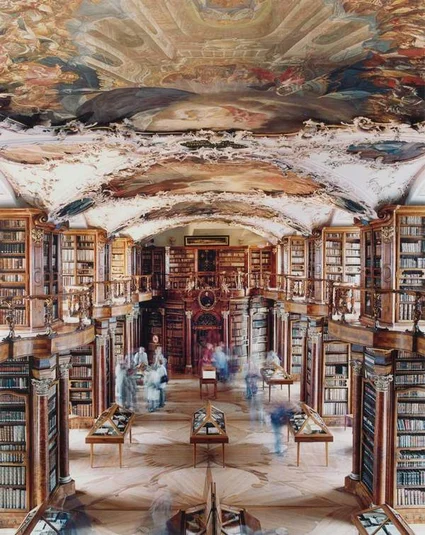
As far as I am concerned, instead, every time I film a video I think of all the photographers and authors who interest me, and of the way they construct an image: from Hockney to Luigi Ghirri, Walter Niedermayr, Bas Princen, Candida Höfer. So, even though I am not an artist, I recognize that I have a very artistic position in relation to this work. Because, at the very same time, it is one hundred percent pedagogy, but it is also something entirely personal: it is my research, which I share with Diego.
All of this has begun to define, in quite a profound way, our way of thinking, our way of being as people, as citizens, but also the way we run an office. Because the vast majority of the things we do we have learned from others: people who had already faced them before us and with whom we had the privilege of establishing a direct dialogue.
In this way we can learn, at the same time, from a more conceptual approach, such as that of Kumar Vyas, or from particularly interesting methodologies, such as those of 51N4E in Belgium, or of Harquitectes, who are extremely constructive architects, almost old fashioned in this sense, because they make buildings, rather than research or publications.
I was talking about this with some friends just the other day: it is surprising, because we can build our own synthesis. We know the way in which these different figures address certain issues, and we can learn from each of them, relating very different approaches to one another. And this is the basis of pedagogy.
GF: If OnArchitecture is also a pedagogical tool, how much are you willing to change in order to make it more accessible or more effective from this point of view?
FDF: On the one hand, we are doing everything possible to bring the academic community into the videos. This is why we are working on a brochure, this is why we continue filming, why we try to build relationships with schools of architecture and to define certain projects together. On the other hand, however, I would also say that we continue to film as we did at the beginning, in 2006: in the end, also for ourselves.
We know very well that in recent years the attention span has decreased. Ten years ago, it was easier for people to watch a thirty-minute video, today very few reach the end. And this can be seen very clearly from the data we obtain from the video platform: many people watch the first five minutes, but very few reach the end of the video.
One possible consequence would be to produce shorter videos, but I do not really believe in this solution. We want to continue engaging with these issues, with the speed of modernity, but this does not mean we will move to TikTok. To be more popular, instead of making interviews on Cedric Price, who is an architect from another generation and whom today, I would say, few people know, even though he is an extraordinary figure, we could make videos on artificial intelligence, on how to produce better images, or similar themes. I am sure it would be more successful. But this is not the culture, nor the vision of the world, that we are interested in constructing.
In fact, the issue of length had already emerged at the beginning of our experience, for reasons I would describe as logistical. You have to imagine that in the first five, perhaps seven years, Diego and I carried out around three hundred interviews. We translated them ourselves, we did the transcriptions manually, before automatic tools existed. I remember, for example, a thirty-page transcription of Yoshiharu Tsukamoto of Atelier Bow-Wow. We did the proofreading, then translated everything into Spanish and English. It was an enormous amount of work, and we did it constantly, almost as an exercise. Of course, all of this obviously required a great deal of time. But, in the end, I am not afraid of long videos. I know that there are people interested in that content, and we therefore try to produce valid content, especially in the case of interviews. They can also be in French, I do not care: I now live in France, and if people express themselves better in French, then we do them in French, the important thing is that the interview is good. I am very pleased with the last people I interviewed: very well-prepared architects and researchers, with whom it was possible to construct truly substantial conversations.
GF: Can we consider OnArchitecture, an audiovisual archive, as a form of teaching beyond the school? I am interested in understanding whether, in your view, a video platform can operate in parallel with traditional academic education, therefore in a freer and more informal way, or whether it can enter directly into institutional paths of architectural education, as material for research and learning.
FDF: I truly believe in video. I do not understand it only as an element of visual impact, nor as something we use simply to build a business. I truly believe in video, and also in online video platforms, as materials for learning architecture. For example, I teach a course in the master's programme at the Pontificia Universidad Católica de Chile, which began during the pandemic, entitled The Studios. I give the students, around twenty of them, a list of two hundred, two hundred and fifty videos, all freely available on the web. This becomes the material we use during the two or three months of classes. The students have to watch a lecture, construct an accurate index of it, produce a summary with images taken from the video, key information, texts, and direct quotations. The following week they present this work. My role, in that context, is above all to provide frames of reference. If, for example, during a presentation someone introduces Dogma, I intervene by trying to give a concise but clear overview, so that everyone can understand what is being discussed. The final objective is for the students to construct an imaginary dialogue between different authors, and it is a very effective exercise.
They can start, for example, from the theme of in-between spaces in collective housing and construct a fictional conversation between eight or ten architects who may never have met. It is once again the idea of architecture as a common field of knowledge: a weaving of ideas.
This is why I strongly believe in the capacity of video. In my courses, in fact, I do not even necessarily speak about how to film architecture, although I have already taught courses specifically on this subject, but rather about research, and about how to use different sources to construct research.
Also, in my design workshop in Chile, where students work on theses and projects, it often happens that they bring many screenshots from videos found on YouTube in order to discuss more precisely the works we are analysing. The official images, the canonical portraits of buildings, are not sufficient. In this sense, I would say that video represents a great opportunity: for better or worse, we live in the age of images.
The apparent curatorial withdrawal of OnArchitecture proves, upon closer inspection, to be a very precise form of critical presence. The archive is not a neutral repository, but the result of a practice of selection, interpretation, and study. It is therefore interesting to observe how a project that also began as a tool for personal inquiry and self-education – carried out through the act of choosing one's own masters and questioning them directly, in a literal sense in the case of the authors and in a broader sense in the case of the buildings – ultimately becomes a tool for the reinterpretation and transmission of knowledge, a pedagogical act in its most concrete form.
Fig. 1 – Screenshot from the OnArchitecture homepage.
Fig. 2 – Still from the film “Loos Ornamental”, part of Heinz Emigholz’s Architecture as Autobiography series.
Fig. 3 – El Croquis, 145, Christian Kerez 2000–2009. (2009). El Croquis Editorial, cover.
Fig. 4 – Still from the video “Quinta Monroy” by Felipe de Ferrari and Diego Grass, 2010, from OnArchitecture.
Fig. 5 – Screenshot from OnArchitecture during an interview with Enrique Walker by Felipe de Ferrari and Diego Grass, 2011.
Fig. 6 – Candida Höfer, Stiftsbibliothek St. Gallen I, 2001. Colour photography, Tate collection (P78678).
Fig. 7 – Screenshot from OnArchitecture during an interview with Enrique Walker by Felipe de Ferrari and Diego Grass, 2011.