Riccardo Rapparini
The subtitle of this issue reads Experiments in the knowledge transmission of architectural culture, whereby knowledge transmission we mean a process of critical knowledge production and dissemination. Before examining the various spaces of transmission, it is useful to define, from the outset, one of the central concerns of this issue: addressing the question of knowledge transmission inevitably entails addressing a question of cultural identity, regardless of the context in which such transmission takes place. In other words, speaking of knowledge transmission means first and foremost interrogating the conditions through which a discipline constructs and continually redefines its own internal composition.
As the selected contributions seek to demonstrate, the mechanisms through which a body of knowledge is transmitted are never neutral. Rather, they contribute to determining which contents are considered relevant, which languages prove most effective, and, more broadly, which cultural position is ultimately adopted.
This clarification allows us to distinguish the notion of knowledge transmission from other concepts that are often conflated with it, such as dissemination, popularization, or communication.
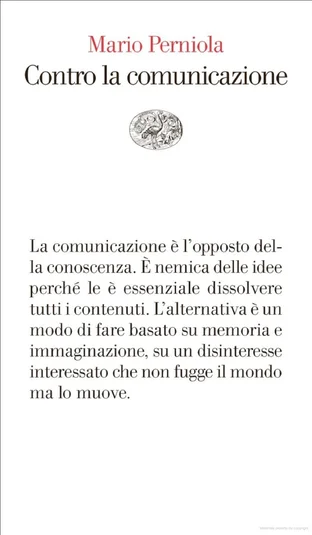
Communication, in particular, deserves a brief digression, for which the reflections of Mario Perniola prove especially useful. In an essay published in 2004, the philosopher described communication as the opposite of knowledge, or as a magic wand capable of transforming «inconclusiveness, retraction and confusion from signs of weakness into demonstrations of strength» before ultimately dismissing it as «the enemy of ideas because its essential function is to dissolve content». More than twenty years after the publication of this pamphlet, it can be argued that Perniola’s intuition has progressively established itself as a defining paradigm of a contemporary condition in which communication primarily evokes marketing, advertising, and promotion. This topic concerns architecture in a particularly urgent way. Over recent decades, the increasing mediatization of society and the growing centrality of communication processes have profoundly affected the architectural field. Visibility, image construction, and the ability to maintain a presence across multiple communication channels have become increasingly important components of professional practice, contributing to a redefinition of the disciplinary foundations that, until the end of the twentieth century, had largely sustained both architecture and its education. A recent master’s programme promoted by a well-known educational institution is emblematic of this transformation. Significantly entitled Marketing and Communication of Architecture: Strategies and Storytelling for a Successful Project, its title alone is almost sufficient to demonstrate the extent of this shift.
Yet the etymology of the word communication points elsewhere. Its roots can be traced to the Greek koinón, that which is common or public, before passing into the Latin cum, from which terms such as communitas, communico, and communicatio derive. Within this genealogy, communicatio opens onto the idea of sharing goods and, above all, knowledge, suggesting a collective transmission of understanding. This semantic proximity has gradually weakened over time through use, following that process of linguistic deterioration that inevitably affects not only language itself but also the worlds it describes.
This brief detour appears necessary, if only to clear the field of possible misunderstandings and allow us to examine the question of knowledge transmission and its educational vocation, particularly in light of a contemporary condition that is far more unbalanced toward communication and yet, perhaps for this very reason, especially worthy of careful dissection.
Let us now turn to the title: Beyond School. Here, “beyond” is not intended simply as a geographical displacement, but rather as an attempt to observe those spaces in which architecture has historically sought – and continues to seek – to construct paths of disciplinary inquiry outside the channels traditionally entrusted with its transmission.
In mapping this geography, it proved decisive to encounter a question posed almost incidentally by Guido Canella during a conference held at Politecnico di Milano in 1999. The question was as follows:
Does one learn more from what is transmitted theoretically within the School, or from what can be acquired autodidactically outside it, through the direct observation of buildings and projects published in architectural magazines?
Without attempting to determine how measurable this more might be, what is significant here is the recognition that the problem of transmission is inseparable from a dialectic between what is taught within the school and what is learned independently beyond it.
Starting from these considerations, it seemed particularly meaningful to dedicate both the research project1 within which this issue is situated and the issue itself to the extra-academic dimension, adopting it as a privileged perspective from which to interrogate the forms through which architectural culture is transmitted. This position derives above all from the conviction that it has been precisely this external sphere that has sought to raise its degree of experimentation, often entering tension with the normativity of the school, which – except in rare cases – tends by its very nature to transmit only that which has already been consolidated.
It is precisely this sphere of learning that constitutes the starting point, and indeed the urgency, of the reflections proposed in this issue, especially if we consider that the world of magazines evoked above has today been transformed into a complex constellation of platforms, devices, and initiatives that gravitate increasingly away from the school and toward autonomous forms of knowledge production and circulation.
The issue may therefore be reformulated through a question suggested by Umberto Eco: «The question that the scholar of communication must ask is this: is the chemical composition of every communicative act identical?»2 (Eco 1973).
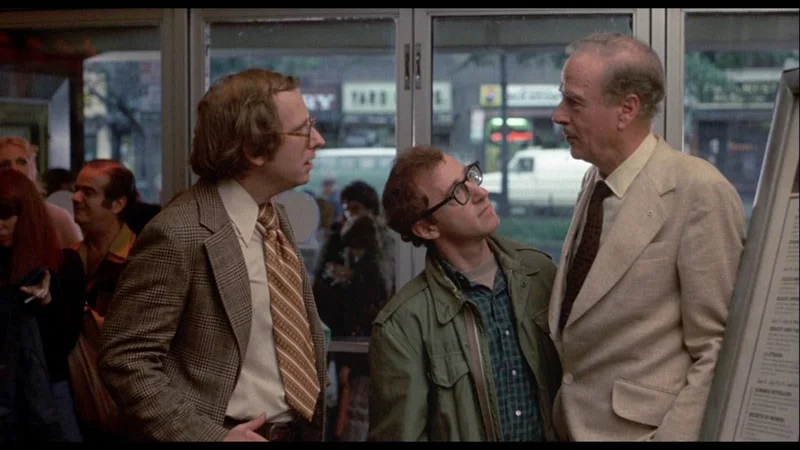
Without claiming to address the problem from the perspective of communication studies, and at the risk of being immediately contradicted by Marshall McLuhan, as happens to the unfortunate professor of “TV, Media and Culture” at Columbia University in the famous scene from Annie Hall, the question nevertheless offers a useful point of departure for investigating the ways in which knowledge is transmitted.
What interests us is to adopt Eco’s question to understand how the «chemical composition» of architecture’s transmission changes as the instruments, media, and cultural contexts through which it operates are transformed. Rather than assuming a deterministic relationship between media and content, this issue seeks to investigate the relationships established among media, languages, audiences, and cultural projects, and above all the role these relationships play in the construction and transmission of architectural culture.
One might imagine that this was essentially the same question implicitly posed by figures such as Ernesto Nathan Rogers, Carlo Aymonino, Vittorio Gregotti, Carlo Mollino, Ludovico Quaroni, Luciano Semerani, and Bruno Zevi, to mention only some of the protagonists featured in this issue – each time they chose to entrust their ideas to a journal, a radio or television programme, an exhibition, or a public lecture.
Historically, architecture has devoted particular attention to the forms through which it transmits itself, transforming them into a genuine experimental laboratory for theoretical construction and critical verification. Throughout the twentieth century, this landscape progressively expanded through a plurality of media. Alongside specialized publishing, represented by books and magazines, important experiments emerged through radio, television, and even cinema.
These media offered the possibility of reaching audiences far beyond the specialist sphere, responding to that aspiration toward the socialization of knowledge that animated a significant group of intellectuals who, in the post-war period, regarded participation in public debate as «a duty, closely connected to the conviction that the intellectual koiné should in some way serve as a guide, even a moral one, for the nation» (Del Vecchio 2010).
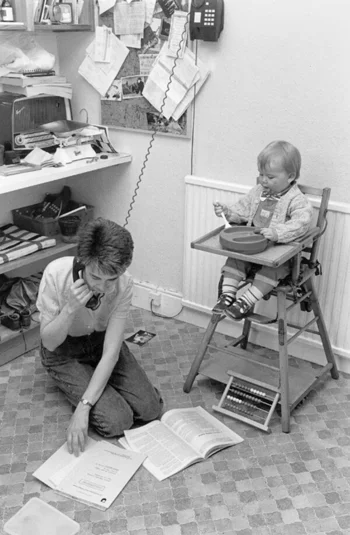
Without anticipating too extensively the themes that will be explored in the individual contributions, it is worth recalling some of the experiences that distinguished themselves through a particularly high degree of originality. Alongside numerous editorial initiatives, significant experiments were developed through less conventional media. Radio, television, and cinema offered alternative yet highly effective perspectives, as demonstrated by educational television programmes such as La casa dell’uomo by Ernesto Nathan Rogers, L’insediamento urbano by Carlo Aymonino, L’uomo e la città by Vittorio Gregotti, and La tradizione ritrovata by Aldo Grasso, Fulvio Irace, and Giampiero Viola, as well as productions with a more explicitly cinematic character, such as Città nuova by Éric Rohmer and La forma della città by Pier Paolo Pasolini. Similarly, in the international context, one might recall the radio programme The Classical Language of Architecture, produced by John Summerson for the BBC, and the broader project of the Open University, which introduced innovative educational models based on the integrated use of television, radio, and telephone. These experiments inspired Bruno Zevi with the idea of a “university of the air” (università dell’aria) (Zevi 1977), later translated into his experience with TeleRoma56. Alongside these initiatives stood a range of fundamental institutions and cultural platforms, from Biennales and Triennales to architecture festivals, archives, foundations, and cultural centres, which played a decisive role in the construction and dissemination of architectural culture.
Today, this system intersects with an extraordinarily diversified media ecosystem that has transformed not only languages but also the very forms through which knowledge is produced.
The implications of this transformation were already clearly perceptible at the beginning of the 2010s. In September 2010, for example, the first issue of FAMagazine was published. At that time, Nokia still dominated the mobile phone market, the iPhone had reached only its fourth generation, Facebook was gradually displacing MySpace as the leading social networking platform, while Twitter was beginning to establish itself as a tool for real-time journalism. Before long, Instagram would timidly begin to appear in the App Stores of the fortunate few who already owned a smartphone. What was taking shape was the granular (Roncaglia 2023) and overexposed ecosystem that would come to characterize the decade that followed.
Given the circumstances, one might travel back more than a century, to the moment when Georg Simmel reversed the famous Franciscan motto «Omnia habentes, nihil possidentes»3 (Simmel 1911–1912) to describe the condition of those who, immersed in an overloaded culture, perceive themselves as having access to virtually unlimited knowledge while remaining unable to assimilate it into their inner lives. More than a simple anticipation of contemporary information overload, Simmel’s reflection identifies a tension that directly concerns the issue of transmission itself: the growing difficulty of transforming the availability of information into culturally meaningful knowledge.
Following the rapid development of mass media and, above all, the emergence of the web, this perception became deeply entrenched, contributing to a situation in which the flow of information transmitted through the multiple channels of contemporary society has become practically impossible to process in its entirety. If this is the condition that characterizes today’s informational ecosystem, it remains necessary to ask how it is experienced by younger generations and, more specifically, by students of architecture.
Within the framework of our research, we sought to investigate this issue through a survey conducted among architecture students4. The aim was to verify or challenge a series of assumptions that have gradually acquired the status of commonplaces: that young people no longer read, that book culture has disappeared, that attention has been replaced by scrolling, and so forth.
The results reveal a natural predominance of digital media in access to information: 99% of respondents use the Internet, 71% rely on online platforms, and 68% access information through social media, whereas only 42% regularly consult books and journals. This imbalance points to a profound transformation in the ways knowledge is acquired, one that some scholars have described as «a genuine anthropological mutation» (Valerii et al. 2015). Particularly interesting, however, is the contradiction that emerges when examining the levels of trust attributed to these various sources. While social media and digital platforms have become some of the primary channels through which information is accessed, only 18% of students consider social media to be reliable, compared to 90% for books and 67% for journals. This paradox, and the urgency it reveals, deserves careful reflection. It demonstrates that, despite their limited perceived reliability, most respondents continue to rely on tools that are more agile, immediate, and user-friendly. To this must be added another significant element: many of the spaces that traditionally performed a function of cultural mediation throughout the twentieth century now appear increasingly marginal. Seventy percent of respondents report rarely visiting archives and research centres, while 64% demonstrate limited engagement with institutions such as the Biennale di Venezia or the Triennale di Milano.
The data, therefore, seem to confirm many of the transformations described thus far. At the same time, however, they raise a further question: what can educators, researchers, and cultural producers do to operate effectively within this landscape and through the channels currently available?
Perhaps what we need is a thread of Ariadne, a thread that allows us to navigate an increasingly complex and labyrinthine ecosystem without losing our way. A thread capable of helping us resist both the enthusiasm of those who uncritically embrace every model offered by the contemporary condition and the scepticism of those who reject them outright. A thread that prevents us from reducing the question of media, tools, and spaces of transmission to a deterministic reading. Instead, it should enable us to continue asking what is being transmitted while everything else changes and, above all, what allows architecture to continue recognizing itself as an expression of culture.
Once this journey beyond the school has come to an end, however, it will be necessary to follow the thread back and return to the classroom, bringing with us what has been discovered and placing it at the disposal of those who, more than anyone else, need reliable coordinates with which to orient themselves autonomously within this mare magnum, the students.
Invoking Umberto Eco one final time:
If you prefer a less paradoxical formulation, I would say this: the battle for the survival of human beings as responsible subjects in the Age of Communication is not won where communication originates, but where it arrives. (Eco 1973)
But let us now turn to the contributions that substantiate the issues discussed thus far.
We considered it particularly valuable to address this theme through the format of a call for papers, with the aim of mapping a geography of experiences that extends from the post-war period, and especially from the experimental initiatives promoted by RAI, to the present day. The resulting chronological span is undoubtedly broad, yet it provides an opportunity to observe, from an evolutionary perspective, several phenomena that run throughout the entire issue.
The contributions are organized around two broad areas. The first concerns the places of extra-academic transmission, such as festivals, public events, and cultural centres: places that have constructed autonomous spaces for the production and circulation of architectural culture. The second focuses on the instruments of transmission, ranging from traditional media to contemporary digital devices.
The issue opens with two contributions devoted precisely to the places. Carlo Quintelli republishes, more than twenty years after its original appearance and accompanied by updated notes, the introductory text to the first Festival of Architecture in Parma (2004), conceived as «an attempt to bring out of the university the contents of scientific research to put them in reaction with an architectural and urban phenomenology» understood in its heterodoxy, composed of complementary arts and forms of knowledge. The Parmese experience emerges as an antidote to «the emerging drifts of an architecture conditioned by the needs of communication aimed at commercial and consumerist success», a theme already discussed in the preceding pages.
Not far away, both geographically and culturally, lies MantovArchitettura, an international architecture event that Elisa Boeri, Luca Cardani, and Claudia Tinazzi describe through its capacity to function not merely as a cultural container but as a genuine pedagogical device capable of adopting the city itself as a laboratory, according to a precise educational vision that combines «education, research, dissemination, and civic commitment».
Alongside these contributions are two very different experiences united by the central role assigned to the community as an active agent of transmission. From the Stazione Rogers in Trieste, described by Thomas Bisiani, emerges a conception of transmission as a critical and civic practice grounded in a continuous interrogation of «the meaning of things» and in an almost «anti-academic» position, understood as a «logical and methodological opposition to that cultural and pedagogical model which reserves exclusively for the university the production and transmission of knowledge».
Leaving Trieste behind, Aleksei Lashkov and Meri Pepanyan accompany us along the nearly three thousand kilometres separating the Friulian capital from Yerevan, Armenia, and more specifically to the Library for Architecture (LFA), a «hybrid educational machine», both physical and digital, founded upon people, conversations, and shared research. Through public programmes, exhibitions, workshops, collective translation experiments involving architectural texts, and encounters with practitioners, this Armenian initiative seeks to establish itself as «a support mechanism, a self-learning space that facilitates discussions and community-driven research».
The contribution by Enrique Encabo, Inmaculada Maluenda, and Íñigo Cobeta serves as a bridge toward the second section of the issue. Through the analysis of several key moments in the career of Rem Koolhaas, including his fascination with digital media during the 1980s and 1990s, the publication of the manifesto-like volume S, M, L, XL, and the first issue of Domus d’Autore, a relationship between architecture and communication emerges that prompts us to reflect on the very role of architecture and on its gradual transformation «from content support to content in its own right».
The question of devices inevitably introduces that of instruments. Let us begin with the traditional ones5. Through different trajectories and figures, the contributions by Michela Morgante, Riccarda Cantarelli, Enrico Prandi, and Alessandra Gabriele focus on the role of television. Initially at the centre of a debate concerning the «legitimacy of a popular medium in conveying “high” content» (Prandi), television gradually evolved into a genuine instrument of knowledge transmission. It did not merely disseminate ideas developed elsewhere but participated directly in the construction of knowledge itself, helping to «elaborate in real time what the intellectual building site was still constructing» (Prandi). From the programmes of Carlo Mollino to the experiments of Carlo Aymonino, passing through Rogers, Gregotti, Quaroni, Tafuri, and extending to the Dutch case of Jaap Bakema, television emerges as a medium capable of operating as a true pedagogical device, a site of theoretical construction and public debate. Reading these four contributions makes clear how television represented a space through which architecture sought to move beyond its disciplinary boundaries and engage with society, becoming a genuine «place of collective literacy» (Cantarelli).
Before turning to digital media and the analysis of several significant experiences, it seemed useful to pause and reflect upon certain phenomena that characterize the contemporary media ecosystem, particularly in relation to images. This is an ecosystem marked by such a «media bombardment based on the quantity of images available on the Internet» (Zammerini) that it has begun to affect the very structure of images themselves, which «seem to lose a semantic structure in which to recognize a complex system of cultural codes and meanings» (Fabris). The crisis of images in the age of social media constitutes, in fact, a theme that will traverse all subsequent contributions at different levels.
It is precisely within these tensions that Enter_Vista, ArchiDIAP, and OnArchitecture are situated: three profoundly different experiences united by the attempt to construct cultural projects within digital environments. Enter_Vista was conceived as a tool for exploring new modes of architectural narration and finds, among other formats, in the video interview a means of reflecting upon how the relationship between instruments and transmission «does not concern the medium alone but directly affects design culture and the ways in which architecture produces and transmits knowledge».
Interviewing Orazio Carpenzano and Fabio Balducci, founders of ArchiDIAP, Alessandro Brunelli reminds us of the centrality, within educational experiences, of transmitting architecture not merely as a collection of data and images but as «a poetic and cognitive experience capable of engaging people emotionally and intellectually, with the aim of sparking in users a desire for deeper understanding».
Finally, OnArchitecture, an audiovisual archive devoted to architecture, likewise employs video as its principal medium while affirming the centrality of authorship in the construction of an editorial project. This position is succinctly expressed in a statement by its founder Felipe de Ferrari, interviewed by Giulia Furlotti: «We are authors. We produce a grammar, a system for filming videos».
The final contributions push the reflection on the relationship between transmission and images even further by placing side by side two experiences that are diametrically opposed in the structure of the communicative act and, for precisely this reason, particularly fruitful when read in parallel.
The first concerns the British podcast Scaffold, which, in the words of its founder Matthew Blunderfield, finds in the very renunciation of images a means of amplifying the spatial conditions of sound. This strategy compels listeners to shift their attention toward elements that normally remain at the margins of architectural experience: processes, biographies, sounds, and relationships that precede the completed work. The interview thus becomes a kind of interpretative scaffold (scaffold means precisely scaffolding), a temporary support that allows meaning to take shape without substituting itself for architecture.
The second is the reflection that Luigiemanuele Amabile, Marianna Ascolese, and Alberto Calderoni devote to Instagram through an analysis of some of its defining characteristics. If the previous case was characterized by the complete absence of images, here we encounter their overwhelming abundance. Within a context marked by a «flood of images», the logic of deep scrolling risks transforming the feed into a sequence incapable of constructing a conscious system of cross-references, reducing it instead to an algorithmic visual accumulation. Yet within this scenario, the authors present two Instagram pages, Olgiati_and_ideas and Studio Sergison, as genuine visual microcosms, capable of partially resisting this dynamic through a curatorial approach that transforms the feed into a selective and legible sequence. In this way, the image ceases to be merely an object of consumption and instead attempts to become a pedagogical instrument for the construction and transmission of architectural projects.
Perhaps it is precisely this theme of curatorship, of the editorial project, that emerges as one of the most significant outcomes of the entire issue. More than the distinction between analogue and digital, what unites the most compelling experiences presented here is their ability to bend the potentialities of a medium toward the construction of a recognizable cultural trajectory, capable of selecting and producing content, or, in other words, culture. From Rogers’s presence on RAI during the early 1950s to the educational use of social media, this trajectory represents one of the many possible threads of Ariadne through which we might attempt to orient ourselves within that Beyond the School that the contributions collected in this issue have sought to unravel. Enjoy the journey!
1 The theme of this call is situated within a line of research initiated by the doctoral dissertation For a School Beyond the School: Phenomena, Tools, and Perspectives of Extra-Academic Transmissibility (R. Rapparini, 2024, University of Parma, XXXVI Cycle) and is currently being further developed by the editors through the research project The Transmissibility of the Architectural Project: Methodologies, Tools, and Digital Languages to Support the Development of an Experimental Prototype (University of Parma). ↩
2 Umberto Eco delivered these remarks at the “Vision 67” conference, organized by the International Center for Communication, Art and Sciences and held in New York in October 1967. ↩
3 The issue of informational overexposure is crucial and, not coincidentally, connects directly to the reasons that led, among other things, to the founding of FAMagazine itself. In the editorial of its first issue, Enrico Prandi traced the origins of the magazine to the need to engage with a culture saturated by information and by recurring, reiterated, and standardized images. This condition made it necessary to establish a channel capable of selecting, organizing, and making available meaningful portions of knowledge – a role that, in all its urgency, is now assumed by numerous other initiatives as well. The extended quotation from Simmel reproduced here is taken from Enrico Prandi’s editorial “Architecture (and Culture) in Times of Crisis. The Reasons for a Magazine” (FAMagazine, no. 1, 2014): «Thus emerges the characteristic dilemma of modern man: the feeling of being surrounded by an infinite number of elements of culture that are not insignificant, yet are not truly meaningful either […]. This situation might be characterized by reversing the motto once used to describe the spiritual poverty of the early Franciscans: nihil habentes, omnia possidentes. In contrast, the people of all excessively abundant and overloaded cultures are omnia habentes, nihil possidentes.» (Simmel, 1911–1912). ↩
4 For a more detailed discussion of the survey findings, readers may refer to the following contribution: R. Rapparini (2026) – “Architectural Discourse in Flux: Rethinking Knowledge Transmission”. In: Research & Teaching Conference. Exploring Academia – From Practice to Publishing 2025, AMPS Proceedings Journal Series. ↩
5 In media studies, a distinction is generally drawn between traditional media and new media, particularly with regard to the role individuals play within the communication process. Put simply, in traditional media the individual is primarily the recipient of communication and engages with content in a predominantly one-way and hierarchical manner. In new media, by contrast, the individual becomes an active participant, able to contribute interactively to the production and circulation of information. Traditional media therefore include print publications (books and journals), television, and radio, whereas new media encompass social media, online platforms, blogs, and similar digital environments. ↩
Blumler, J. (1992) – Television and the Public Interest. Vulnerable Values in Western European Broadcasting. London, Sage.
Boni, F. (2004) – Etnografia dei media. Roma-Bari, Laterza.
Canella, G. (1999) – “Intervento”. In E. Bordogna (edited by), Composizione progettazione costruzione. Roma-Bari, Laterza.
Eco, U. (1973) – “Per una guerriglia semiologica”. In: Id., Il costume di casa. Milano, Bompiani.
Eco, U. (2022) – L’era della comunicazione. Milano, La nave di Teseo.
Lughi, G. (2006) – Cultura dei nuovi media. Milano, Guerini e Associati.
McLuhan, M. (1967) – The medium is the message. New York, Bantam Books.
Perniola, M. (2004) – Contro la comunicazione. Torino, Einaudi.
Prandi, E. (2014) – “Architettura (e cultura) in tempo di crisi. Le ragioni di un magazine”. FAMagazine 1, 2014.
Roncaglia, G. (2023) – L’architetto e l’oracolo. Forme digitali del sapere da Wikipedia a ChatGPT. Laterza, Roma-Bari.
Simmel, G. (1911) – “Concetto e tragedia della cultura”. In: Id. (1993), Saggi di cultura filosofica. Parma, Guanda Editore.
Valerii, M., Conti Nibali, M., Lapenna, L. e Addonisio, G. (2015) – La trasmissione della cultura dell’era digitale. Rapporto finale, Censis-Treccani. https://static.treccani.it/export/sites/default/cultura/eventi_sala_igea/iniziative/La_trasmissione_della_cultura.pdf [last accessed 26-01-2024].
Zevi, B. (1977) – “Per un’università dell’aria”. L’architettura – cronaca e storia, 270 (July).
Fig. 1 – Cover of the book Contro la comunicazione by Mario Perniola.
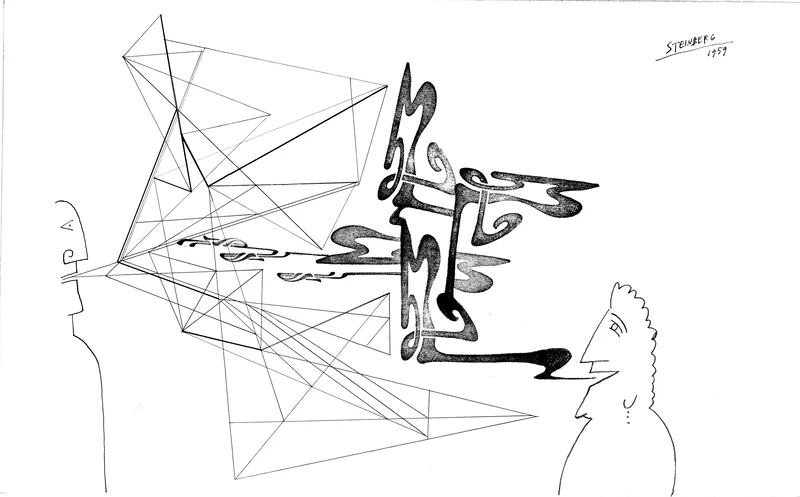
Fig. 2 – S. Steinberg, Speech, 1959. Ink, pencil, Conté crayon and rubber stamps on paper, 15 x 20 inches. © The Saul Steinberg Foundation.
Fig. 3 – Still from Annie Hall directed by Woody Allen in 1977. Marshall McLuhan can be seen on the right.
Fig. 4 – An Open University student during a telephone tutorial. From: Daniel Weinbren, The Open University: A History (2014).